

You Have 30 Seconds. Here’s How Brands in DC Are Actually Winning With Video
If you’ve been in this business for a while, you’ve seen how quickly things have changed.
Not long ago, a polished two or three minute brand video was enough. It lived on a website, maybe played at an event, and did its job well. Today, that same client is asking how to break that content into short vertical clips for social.
There’s a reason for that shift.
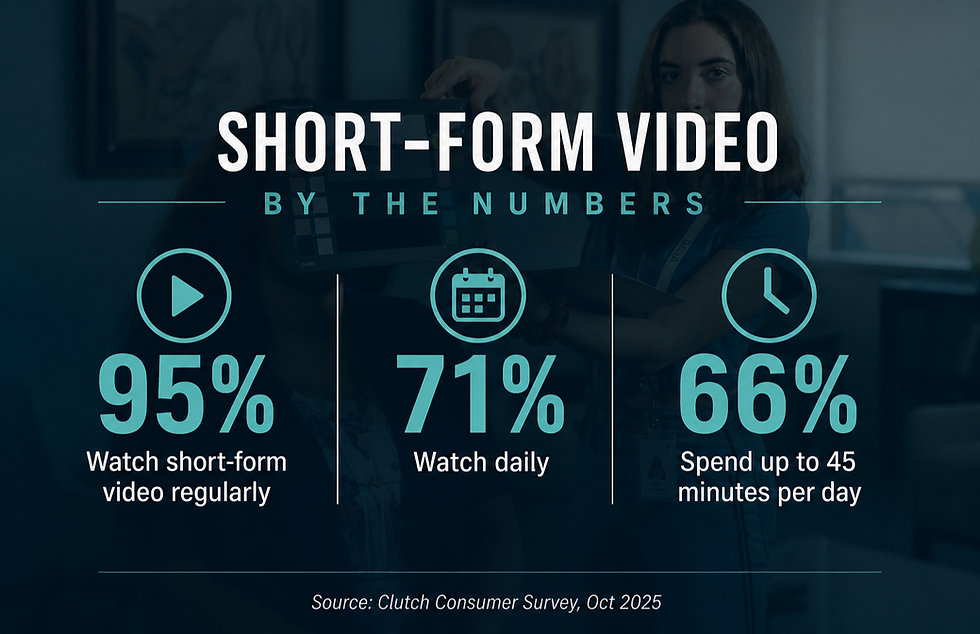
A recent report from Clutch looked at how people are actually consuming video now. Their October 2025 survey found that 95 percent of consumers watch short form video regularly, and 71 percent are watching it every day.
That’s where attention is going.
For anyone investing in video production in DC, that changes the playbook.
Attention Works Differently Now
What stands out in the data is not just how many people are watching, but how they’re watching.
Only 9 percent of viewers say they are fully paying attention to short form content.Most people are scrolling, multitasking, or half engaged.
At the same time, 88 percent say a video needs to grab them within 30 seconds or they move on.
That lines up with what we see on real projects. You can have great visuals, strong messaging, and a solid concept, but if the opening doesn’t land quickly, people don’t stick around long enough to care.
A lot of branded content looks good and still underperforms for that exact reason.
Where People Are Actually Watching
The Clutch report also breaks down where viewers spend their time.
YouTube Shorts leads at 61 percent, followed by Instagram Reels at 53 percent and TikTok at 43 percent.
Each platform has its own personality.
YouTube tends to reward useful and educational content. Instagram leans more toward lifestyle and brand identity. TikTok still favors experimentation and immediacy.
For brands working with a video production company in Washington DC, this matters. One piece of content usually needs to be shaped differently depending on where it’s going to live.
What Drives People to Act
One of the more interesting findings in the report is how often short form video leads to real engagement.
55 percent of consumers say they have interacted with a brand after seeing a short video.42 percent say they have made a purchase after watching one.
That’s not just visibility. That’s measurable impact.
We’ve seen that play out many times with our own work.

Case Study: Petal It Forward
The Society of American Florists came to us with a simple idea. Give away bouquets in public and capture the reactions.
There was no complicated script and no heavy branding layered on top. The focus stayed on real interactions and genuine emotion.
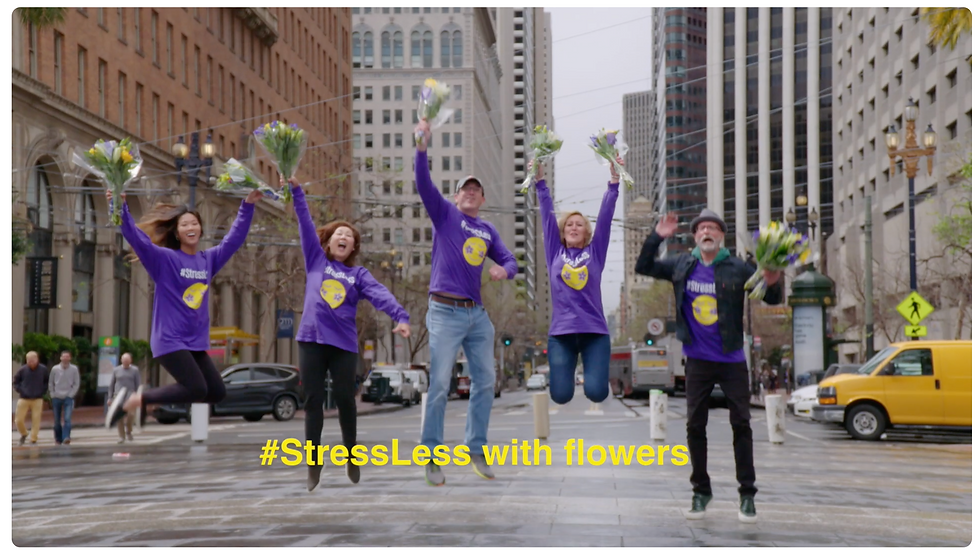
The campaign took off online, generated strong engagement, and went on to win an ASAE Gold Circle Award.
What made it work was how quickly it connected. Viewers understood what was happening right away, and it felt authentic enough to share.
That lines up directly with the Clutch findings around hooks and authenticity.

Case Study: SMPS 50th Anniversary
A very different kind of project, but the same principle applies.
For the SMPS 50th Anniversary video, the audience already had a connection to the organization. The goal was to keep them engaged and reinforce that connection.
We structured the opening so viewers were pulled into the story immediately instead of easing in slowly. That small shift had a noticeable effect on how long people stayed with the piece.
Even when the audience is invested, attention still has to be earned.

How People Are Watching in Real Life
Another detail from the report is easy to overlook but important.
Most people are watching short form video during downtime at home, often while doing something else at the same time.
That affects how content needs to be produced.
Visual clarity matters. Captions matter. Pacing matters. The story has to come through even if the sound is off or the viewer is only half focused.
When we approach video production in DC, that context is always part of the conversation. It’s not just about the message. It’s about how that message is experienced in the real world.

Where This Is Headed
Short form video is not replacing longer storytelling. It’s changing how people discover it.
A short clip might be the first touchpoint that leads someone to a full campaign, a longer piece, or even a documentary.
We’ve seen that happen with projects like Smile for the Dead. Discovery often starts with a quick moment that pulls someone in before they ever commit to watching the full story.
A Practical Takeaway
If you’re creating video today, the first few seconds carry more weight than they used to.
The opening needs to give the viewer a reason to stay. The content needs to feel real. And it has to fit naturally into how people are already consuming media.
That’s where experience makes a difference. Not just in production quality, but in understanding how audiences behave.
Let’s Talk
If you’re looking at your current video strategy and wondering how it holds up in this environment, it’s worth a conversation.
We can walk through what you’re producing now, where attention might be dropping off, and how to shape content that performs across platforms.
Reach out to Puritano Media Group to set up a strategy call at charlie@puritano.com or 703-490-0040.

Comments