

Keep It Human: Real People Are the Content Strategy Now
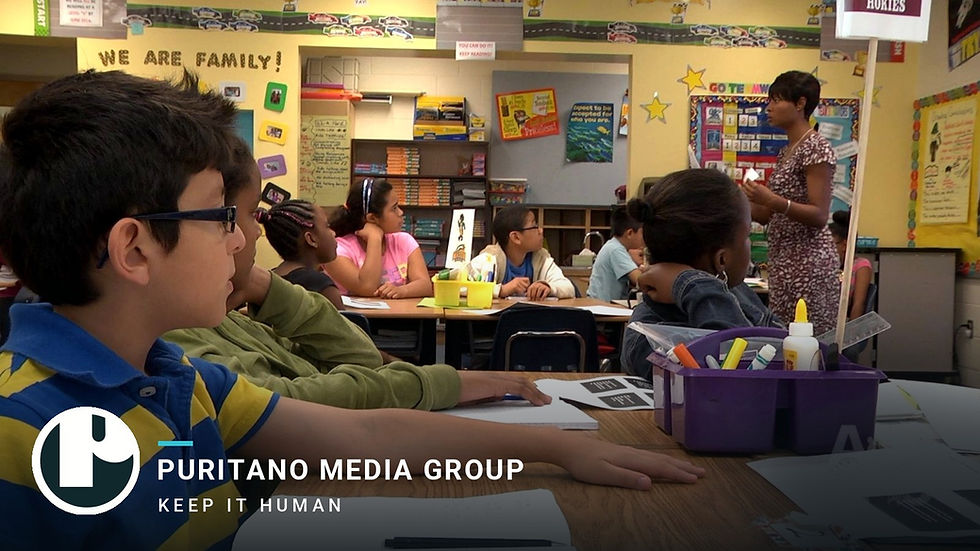
Every year the production industry publishes its trend reports, and most of them predict more of whatever was already selling. This year one of them named something our clients have been proving for a while. The 2026 Commercial Filmmaking Trend Report from Filmsupply and Musicbed identifies eight filmmaking trends for the year, and the one that matters most to organizations like yours is called Keep It Human: real people, in natural environments, filmed observationally, telling their own stories in their own words.
The report's reasoning is worth understanding, because it explains a shift in what audiences believe. Production spectacle used to be the differentiator. A polished effect or an impossible camera move signaled that a brand had invested in the work. That signal is gone. Sophisticated effects and AI-generated imagery are now easy to produce, which means they no longer tell the audience anything about the organization behind them. What still reads as credible is a real person with a real story, filmed with enough craft that the audience can settle in and trust what they are hearing. The report puts emotional credibility ahead of production spectacle, and it pairs Keep It Human with a second trend called Character Stories, which builds a film out of several people's perspectives rather than a single polished spokesperson.
That pairing is the useful part for anyone planning a year of content, because it answers the scale question. Organizations do not struggle to find one good story. They struggle to keep telling true stories month after month without repeating themselves or draining their team. The answer is a format built on a bench of real voices.
How our clients scale human stories
For DiscoverE, we produce Chats with Changemakers, a podcast and video series in which engineers talk with student hosts about the work they actually do. One recent episode passed 139,000 views in a single month, and the campaign around the Roman Space Telescope episode with optical engineer Margaret Dominguez passed 40 million impressions. Each conversation becomes a full episode, then short clips, then social cuts, so a single afternoon of filming feeds weeks of publishing. The format holds steady while the people change, and the library of real engineers telling real stories keeps growing. That is what scaling looks like when the raw material is people instead of footage.
The same pattern sits behind work we have done for years. Faces of Strength built an Army program out of individual portraits, soldiers telling their own stories one at a time until the series added up to a picture of the institution itself. For the Washington Building Congress, we film master craftspeople being honored for a lifetime of work, one portrait at a time, and the series has become a living record of the building trades in this region. Catholic International University's gala film works the same way at a smaller scale: students and alumni describe in their own words what the university changed for them, and one evening's film becomes a year of fundraising material.
In each case the production discipline is the same. Find the people whose experience is the proof of what your organization claims. Put them in their real environment. Give them a skilled interviewer and the time to say it properly. Then build the format so one person's story can carry a flagship film, an episode, and a set of short pieces, instead of being spent in a single post.
Made by fellow humans
There is a second reason the report's timing matters. The alternative to filming real people is generating synthetic ones, and for institutions whose credibility is their main asset, that trade is a bad one. A university, an association, or a federal program cannot ask for trust while showing its audience people who do not exist. Our crews are small and experienced, and the reason a real crew matters is not nostalgia. It is that a good interview is a human skill. An interviewer hears the pause before the honest answer and follows it. A camera operator stays with a face a beat longer because something true is happening. Software can render a person. It cannot interview one.
What to do with this in your 2027 planning
Audit the content you published this year and count how much of it is a real person telling a true story, in their own words, in a real place. For most organizations the honest number is low, and the rest is announcements, graphics, and stock. Then pick the three people your audience would cross a room to hear, and build the format that lets those voices carry a season of content rather than a single video.
If you want production help doing that, that is the work we do. We would rather help you build a library of your own people's stories than sell you one more polished video that sounds like everyone else's.


Comments