

Why Video Content Boosts Engagement for Marketers
Updated: Jul 22

If you’ve ever watched a text post get ten likes while a short video from the same brand gets thousands of shares, you already know something important: why video content boosts engagement is not a theoretical question. It’s a practical reality with measurable consequences for your marketing results. Video combines sound, visuals, and storytelling in a way that text simply cannot replicate, and platforms reward that combination with wider reach. This article breaks down the science, the metrics, the creation strategies, and the repurposing tactics that make video the most powerful format in a modern marketer’s toolkit.
Table of Contents
Key Takeaways
Point | Details |
Video outperforms static content | Video earns significantly more time on page and higher interaction rates than text or image posts. |
Engagement rate beats view count | Saves, shares, and comments signal real audience intent far better than raw views alone. |
The first 30 seconds decide everything | A strong hook in the opening half-minute is the single biggest factor in audience retention. |
Repurposing multiplies ROI | One webinar or long-form video can generate months of content across multiple formats and channels. |
Matching format to funnel stage matters | Different video types serve awareness, consideration, and decision stages in distinct ways. |
Why video content boosts engagement more than text or images
There is a cognitive reason video holds attention so effectively, and it goes beyond the fact that it moves. When someone watches a video, their brain processes visual cues, tone of voice, facial expressions, and narrative structure simultaneously. That multi-channel input creates a richer memory trace than reading the same information in a paragraph. The result is better retention and a stronger emotional connection to the brand delivering the message.
Video humanizes brands in a way no written post can match. Hearing a real person answer a common question, or watching a customer share a genuine experience, reduces hesitation and accelerates trust. That trust-building function is one of the core benefits of video marketing, and it operates even before a viewer consciously decides they’re interested in your product.
Platform mechanics amplify this further. YouTube Shorts generate fast engagement signals like likes, shares, and replays that quickly push videos to wider audiences, removing the subscriber bottleneck that limits text and image posts. The near-zero barrier to interaction means engagement accumulates faster, which feeds algorithms and expands reach organically.
Consider what this means in practice:
Emotional resonance: Faces and voices trigger empathy responses that static images rarely match.
Platform rewards: Every replay, share, or comment signals relevance, earning broader distribution.
Trust compression: Video answers complex questions in minutes, compressing what might take weeks of written nurturing.
Recall advantage: Viewers retain significantly more information from video than from text alone.
“Video doesn’t just communicate information. It creates an experience the viewer can revisit, share, and act on.”
The impact of video on engagement is not platform-specific, either. From LinkedIn to YouTube to Instagram, video consistently outperforms every other content format for reach and saves. That consistency is what makes it worth the investment.
Measuring engagement: what actually matters
Most marketers track views. That’s understandable because views are the most visible number. But views alone tell you almost nothing about whether your video is working.
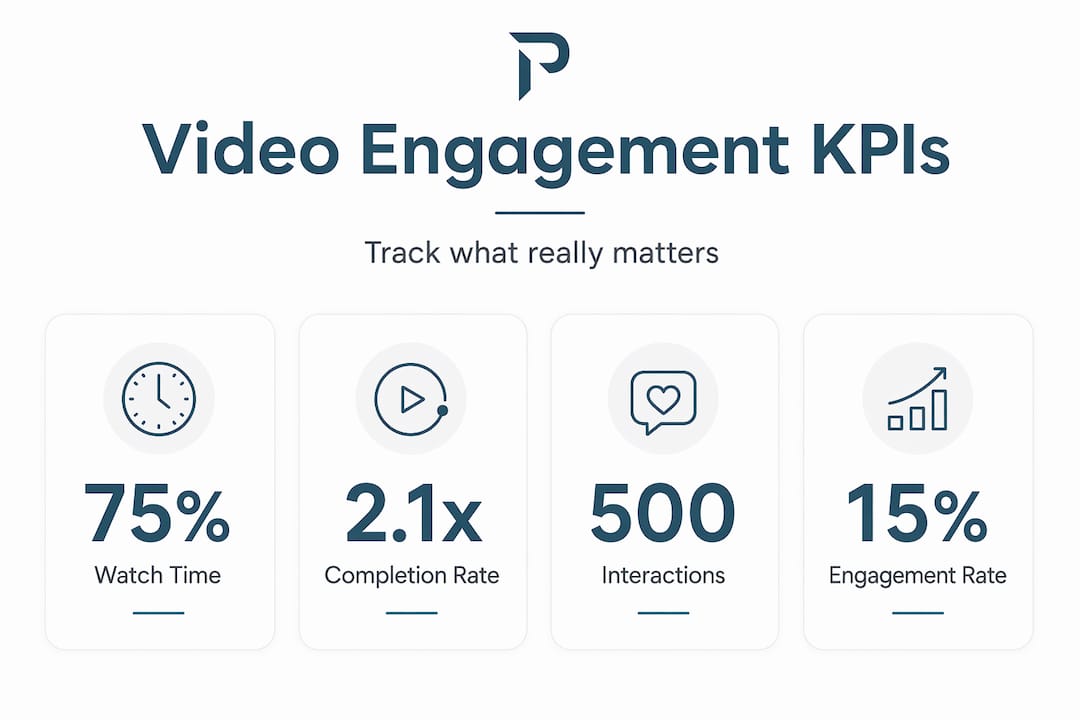
Engagement rate, calculated as total interactions divided by total views, is a far more useful signal. A video with 500 views and 120 comments, 80 shares, and 60 saves is outperforming a video with 50,000 views and 12 comments by a wide margin when it comes to actual audience connection. Platforms recognize this distinction and reward the former with more distribution.

Here’s a breakdown of the metrics worth tracking:
Metric | What it tells you | Why it matters |
Watch time | How long viewers stay | Signals content quality to algorithms |
Completion rate | Percentage who watch to the end | Indicates strong hooks and sustained value |
Comments | Active audience response | Shows emotional investment and community building |
Shares | Viewer advocacy | Expands organic reach without ad spend |
Saves | Deferred intent | Signals high-value content viewers want to return to |
Click-through rate | Post-video action | Measures how well video drives funnel movement |
Action-based metrics like comments, shares, and website visits now reflect higher-quality audience intent than passive view counts. This shift in how marketers define success is one of the clearest signs that the industry has matured in its understanding of how video enhances interaction.
Pro Tip: Set up a simple monthly tracking spreadsheet comparing engagement rate across your videos, not just view counts. You’ll quickly identify which topics and formats actually connect with your audience versus those that get clicks but lose people after ten seconds.
Watch time and completion rate deserve particular attention. If viewers consistently drop off at the 45-second mark in your two-minute videos, that’s a specific and fixable problem. It tells you the first 45 seconds are strong but the content loses direction. That’s a script issue, not a production issue, and it’s the kind of insight raw view counts will never surface.
Best practices for creating video that holds attention
Knowing why video content boosts engagement is useful. Knowing how to create video that actually delivers that engagement is what separates brands with growing audiences from those that keep publishing to silence.
The first 30 seconds of a video are where audience retention is won or lost. YouTube’s own data shows steep drop-off in the opening half-minute when hooks are weak. The fix is simple in principle: start with your core value immediately. No lengthy intros, no animated logo, no “hey guys, welcome back.” Open with the answer, the tension, or the result.
Beyond the hook, here’s what consistently produces strong engagement:
Match length to platform intent. LinkedIn users tolerate longer, educational content. TikTok and YouTube Shorts reward videos under 60 seconds with higher completion rates. Posting a three-minute explainer as a YouTube Short is the wrong animal in the wrong habitat.
Write for captions first. A significant share of video is watched without sound, particularly on LinkedIn and Facebook. If your video loses its meaning without audio, you’re losing a large portion of your potential audience before they give you a chance.
Use pattern interrupts. A change in camera angle, a cut to a graphic, or a bold on-screen text callout resets attention every 20 to 30 seconds. This is especially important for videos over 90 seconds.
End with a clear next step. Ask a question in the comments, direct viewers to another video, or state a specific call to action. Ambiguity at the end of a video kills the engagement momentum you just built.
Reply to comments in the first hour. Pinning questions and replying promptly doubles comment counts and signals relevance to algorithms. This is one of the lowest-effort, highest-return habits a video marketer can build.
Pro Tip: Script the first 15 seconds of every video word for word, even if the rest is conversational. The hook is too important to wing.
Repurposing video to extend engagement and ROI
One of the most underused strategies in video marketing is treating a single production as a source asset rather than a finished product. Nearly 90% of teams reuse webinar content, and replays continue generating views for months after the live event. That’s a compelling case for webinars alone, but the logic applies to any long-form video.
Here’s how a single 45-minute corporate video or webinar can generate a full content calendar:
Short clips (60 to 90 seconds): Pull out the three strongest moments and publish them as standalone social videos with context-setting captions.
Blog post: Transcribe and edit the content into an article that captures search traffic from people who prefer reading.
Email series: Break the core points into a three-part email sequence for nurturing leads already in your funnel.
Podcast episode: Strip the audio and publish it as a podcast if the content holds up without visuals.
Quote graphics: Pull one or two strong lines and turn them into shareable image posts to extend reach across platforms that favor static content.
Format | Time to produce | Engagement shelf life |
Original long-form video | High | Months to years |
Short social clip | Low | Days to weeks |
Blog post from transcript | Medium | Months (SEO-driven) |
Email sequence | Medium | Campaign duration |
Podcast episode | Low | Ongoing (evergreen) |
Video content and audience retention improve when viewers encounter the same ideas across multiple formats and touchpoints. Repetition builds familiarity, and familiarity builds trust. This multi-format approach also lets you boost your social media presence without constantly producing net-new content from scratch.
Choosing the right video format for your audience
Not every video serves the same purpose, and matching format to funnel stage is one of the most practical decisions you can make in a video marketing strategy.
Explainer videos work best at the awareness stage. They answer the “what is this and why should I care?” question without requiring the viewer to already trust you.
Testimonial and case study videos are built for the consideration stage. Authentic storytelling here reduces hesitation and validates the decision a prospect is already leaning toward.
FAQ videos are consistently underused. Answering the five or ten questions your sales team hears every week on camera creates content that serves multiple audiences at once: prospects researching, current customers troubleshooting, and search engines indexing.
Live video and virtual events generate the highest real-time engagement of any format because viewers can ask questions and see answers in the moment. The community interaction during a live session is the kind of experience that improves user engagement in ways pre-recorded content cannot replicate.
Behind-the-scenes content humanizes your brand quickly and costs almost nothing to produce. A 60-second clip of how your team prepares for a client presentation builds more trust than a polished brand reel at a fraction of the cost.
The best video marketing programs use all of these formats in rotation. Each one answers a different question at a different moment in the buyer’s journey, and together they create a complete picture of who you are and why your audience should stay connected.
My take on what actually drives video engagement
I’ve worked with a lot of brands that spend months agonizing over production quality before publishing a single video. The thinking is understandable: you want to look professional. But in my experience, the videos that consistently generate the strongest engagement are rarely the most polished ones. They’re the ones where a real person answers a real question with genuine conviction.
What I’ve learned is that quick, authentic connection beats production gloss almost every time. A founder explaining a product decision with a phone camera and honest language will outperform a scripted corporate piece with a six-figure budget if the former actually says something the audience needs to hear. That’s not an argument against professional production. It’s an argument for prioritizing what you’re saying before you worry about how it looks.
The second thing I’d stress is community interaction. Pinning a specific question in your comment section and responding consistently turns passive viewers into active participants. Most brands ignore this entirely, which is a real missed opportunity. The algorithm rewards it, and viewers who feel heard come back.
Finally, the brands I’ve seen win with video treat every piece of content as a long-term asset. They track which videos drive website visits and inquiries six months after publication, not just in the first week. That long view changes the kind of content you create and the topics you’re willing to invest in.
— Charlie
How Puritano can sharpen your video engagement strategy
If you’re ready to move from posting videos and hoping for results to building a video strategy that generates measurable engagement, Puritano Media Group is worth a conversation. We’ve spent over two decades producing content that connects, from corporate video production built for business objectives to music videos crafted for maximum audience impact. We also specialize in virtual events that drive live interaction and generate repurposable content your team can use for months. Every project starts with the story you need to tell and the audience you need to reach. The production follows from there.
FAQ
Why does video content get more engagement than text?
Video combines visuals, sound, and narrative simultaneously, creating a richer experience that text cannot replicate. Platforms also reward video with algorithmic distribution, amplifying reach based on interactions like shares and replays.
What video metrics should marketers track?
Watch time, completion rate, comments, shares, and saves are stronger indicators of real engagement than view counts alone. Action-based metrics reflect genuine audience intent and predict downstream business impact more accurately.
How long should a marketing video be?
Length depends on the platform. YouTube Shorts and TikTok perform best under 60 seconds, while LinkedIn and YouTube tolerate two to five minutes for educational content. The right length is however long it takes to deliver clear value without padding.
Can one video generate multiple pieces of content?
Yes. A single webinar or long-form video can be repurposed into short social clips, blog posts, email sequences, and podcast episodes. Reusing video content extends its shelf life and maximizes the return on your original production investment.
What type of video builds trust fastest?
Testimonial and case study videos are the most effective trust-builders because they feature real customers describing real outcomes. Brand storytelling through video reduces audience hesitation faster than any other content format at the consideration stage.
Recommended
Comments