

Building Nonprofit Brand Identity Through Video

Your nonprofit’s brand is not your logo. It is not your color palette or your tagline. It is the feeling someone gets when they watch one of your videos and think, “I trust these people, and I want to help.” That shift, from recognition to trust to action, is where nonprofit brand identity through video becomes one of the most powerful tools you have. Most organizations underestimate it, treating video as a one-off campaign asset rather than the living, breathing expression of their mission. This article will show you exactly how to change that.
Table of Contents
Key Takeaways
Point | Details |
Video builds brand beyond logos | Consistent video storytelling communicates mission, values, and personality far more deeply than static visuals. |
Platform matters as much as content | Tailoring video format and tone to LinkedIn, Instagram, Facebook, and your website maximizes brand clarity and engagement. |
Ethics protect brand trust | Prioritizing dignity and consent in storytelling is not optional. It is what separates trusted organizations from ones that lose donors. |
Measurable goals drive better video | Setting specific KPIs before production keeps campaigns focused and makes it easier to prove real impact. |
Consistency compounds over time | Repeatable templates and episodic formats create recognition and deepen audience relationships across every touchpoint. |
Nonprofit brand identity through video: the foundations
Most branding conversations for nonprofits start with visuals: choose a logo, pick fonts, define your color system. Those things matter, but they are not your brand. Your brand is your purpose, your positioning, your values, and the personality that comes through in every interaction. 94% of donors judge credibility based on design before they engage, which tells you that first impressions are real. But video is what converts a first impression into a lasting relationship.
Video is a different animal from static branding. It moves, speaks, and creates an emotional experience that a logo simply cannot. When you put a real beneficiary on screen, when you show the work happening in real time, when you let your team speak with genuine conviction, you are doing something no brand guide can do on its own. You are making your mission tangible.
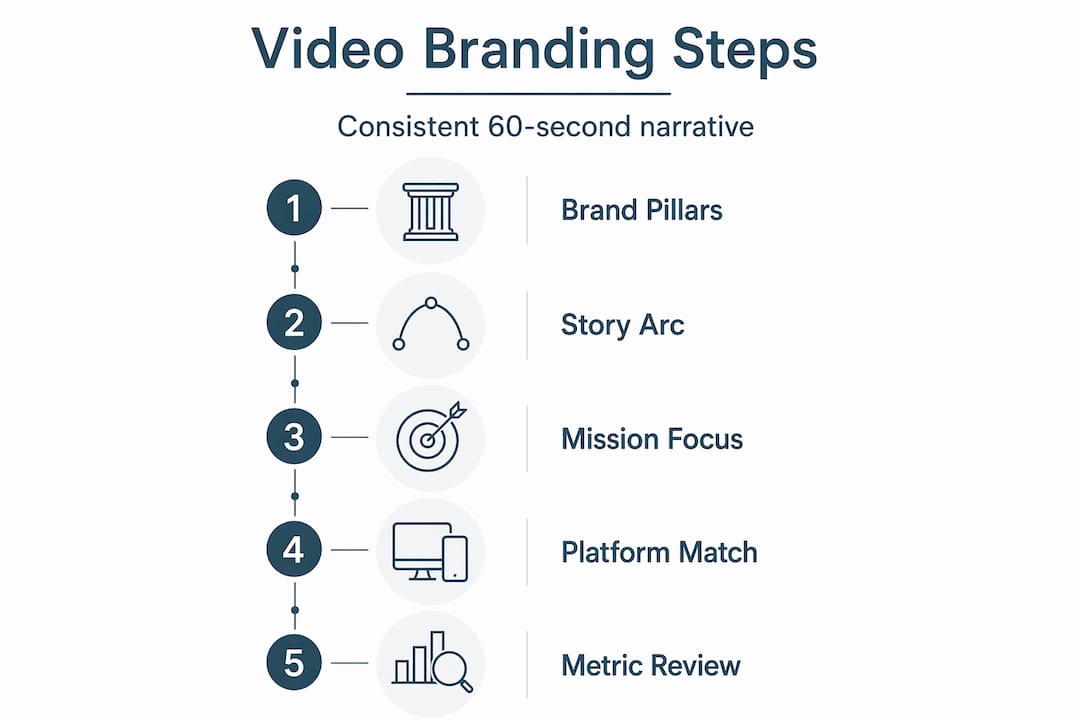
The strongest nonprofit brand storytelling follows a clear narrative architecture. For awareness campaigns, that structure typically looks like this:
Hook (0 to 5 seconds): A visual or question that stops the scroll immediately
Problem (5 to 20 seconds): The challenge your community faces, stated plainly and with specificity
Solution and impact (20 to 45 seconds): What your organization does and the difference it makes, shown with evidence
Call to action (45 to 60 seconds): A single, specific ask that tells the viewer exactly what to do next
This 60-second narrative arc is not just a video format. It is a brand statement. Every time you use it consistently, you are training your audience to recognize how you communicate and what you stand for.
Pro Tip: Before you script a single line of video content, write down your three core brand pillars. Every video you produce should map directly back to at least one of them. If it does not, reconsider whether you need that video.
Platform-specific video strategy for nonprofits
One of the most common mistakes in video marketing for nonprofits is producing one video and pushing it everywhere. Each platform has a different audience with different expectations, and a single cut will not serve all of them equally. Tailored video strategies per platform strengthen brand clarity and donor engagement in ways that a one-size-fits-all approach simply cannot match.
Here is how that plays out in practice:
Platform | Best Video Format | Brand Focus | Key Metric |
Executive thought leadership, impact reports | Authority, credibility | Click-through rate, shares | |
Volunteer and beneficiary stories, event recaps | Community, connection | Reach, comments, shares | |
Short reels, “day in the life” content | Authenticity, emotion | Saves, follows, story views | |
YouTube | Documentary-style, full campaign videos | Depth, mission clarity | Watch time, subscribers |
Your website | Long-form impact stories, calls to action | Conversion, trust | Time on page, donations |
LinkedIn responds well to data and leadership. Think a two-minute video from your executive director explaining what your latest impact report actually means for the people you serve. Facebook is where volunteer-focused stories tend to perform best, because that platform’s audience values community and relatability over polish.
Instagram is built for short, emotionally resonant content. Authentic short-form videos that reveal “day in the life” stories from beneficiaries or volunteers increase emotional connection and brand loyalty in ways that a produced testimonial rarely does. A 30-second reel showing a volunteer’s morning routine at your food bank can outperform a slick promotional video on that platform every time.

Your website, though, is where you bring it all together. It is the hub where someone who watched your Instagram reel and then your Facebook story finally goes to understand the full picture. That is the place for deeper engagement, longer video content, and direct calls to action tied to donation or signup.
Pro Tip: Do not export the same video file to every platform. Recut your content to match each platform’s preferred aspect ratio and length. A 16:9 horizontal cut works on YouTube; a 9:16 vertical cut works on Instagram Stories and TikTok. Same story, different format, significantly better performance.
Ethical storytelling as a brand asset
Here is something the branding world does not always say plainly: the way you tell your stories says as much about your organization as the stories themselves. Nonprofits that use exploitative imagery or manipulative emotional pressure to drive donations may see a short-term spike, but they erode trust over time. And in the nonprofit world, trust is the only currency that truly matters.
Ethical storytelling prioritizes dignity, consent, and empowerment. That means getting meaningful informed consent from everyone who appears in your videos. It means showing people as agents of their own stories, not as passive subjects of your organization’s generosity. It means being accurate about what your programs do without overpromising.
When you are evaluating a video production partner, ask these questions directly:
Do they have experience working with nonprofits or community-centered organizations?
How do they handle consent, particularly with vulnerable populations or minors?
Can they show you examples of storytelling that respects the subject’s dignity rather than exploiting their hardship?
Do they understand the difference between emotional resonance and emotional manipulation?
“The biggest risk in nonprofit video is storytelling that exploits vulnerability rather than empowers storytellers.” — Swaim Strategies
A video that makes a donor feel guilty is not the same as a video that makes a donor feel inspired. The first might generate a one-time transaction. The second builds a relationship that lasts years. Integrated campaigns that use a unified platform and tone, the way Doctors Without Borders deployed their TV and digital campaign together, show how brand credibility compounds when your messaging is consistent and honest across every channel.
Planning, producing, and measuring your video campaigns
Strategy without execution is just a document. Here is a practical process for turning your brand video goals into results you can actually track.
Define your campaign objective first. Are you building awareness? Recruiting volunteers? Driving end-of-year donations? Your objective determines everything else, from the video format to the call to action. Specific KPIs tied to objectives include donation conversion rate, cost per donor acquired, click-through rate on your CTA, and viewer retention rate. Set them before you shoot a single frame.
Build modular video templates. One of the smartest things a nonprofit marketing team can do is create a reusable production framework. A branded intro sequence, consistent lower-third graphics, a standard outro with your donation link. These elements create visual recognition without requiring a full production budget every time. Matching video styles to platform and using templates saves both money and time across your campaigns.
Incorporate user-generated content strategically. Branded hashtag campaigns that invite supporters to share their own videos amplify community engagement and give you authentic content at scale. When a donor shares a video of themselves completing a challenge for your cause, they become a brand ambassador. Their network becomes your audience.
Use episodic formats to deepen relationships. Rather than one annual impact video, consider a short series. A monthly “Stories from the Field” series, or a quarterly behind-the-scenes look at your programs, trains your audience to return. Episodic content builds anticipation and reinforces your brand identity with each installment.
Review your metrics and adjust. After each campaign, measure what actually happened against the KPIs you set. Visual representations of donation impact in follow-up videos, showing donors exactly what their contribution funded, improve conversion rates on future appeals. The data from each campaign should inform the next one.
You can also explore nonprofit video strategies that cover platform-specific distribution in more depth, particularly for organizations managing limited production resources.
My perspective on what actually moves the needle
I have worked with nonprofit organizations across a range of sectors, from advocacy groups to social services to arts organizations. And I will tell you what I see consistently: the ones who treat video as a strategic brand asset from the beginning get dramatically better results than the ones who commission a video when the grant deadline is looming.
The misconception I see most often is that video is a deliverable. You check a box, you post the video, and you move on. What actually builds a nonprofit’s brand identity is a system of video content, where each piece reinforces the others, each platform tells a coherent part of the same story, and the audience sees a consistent organization with a clear point of view over time.
The ethical dimension matters more than most people admit. I have seen organizations lose long-term donors not because of a program failure, but because a video felt exploitative. The subject was shown in a way that prioritized emotional manipulation over honest representation. That kind of storytelling is a red flag, and donors notice it, often without being able to articulate exactly why the video felt wrong.
My honest advice: start with your mission, not your camera. Write down what your organization stands for, who your audience is, and what you want them to feel after watching your content. Then build your video strategy around those answers. The production quality matters, but it matters a lot less than the clarity and authenticity of what you are saying.
— Charlie
How Puritano can help your nonprofit tell its story
Ready to turn your mission into a video brand that donors and supporters recognize and trust?
Puritano Media Group has spent over two decades helping nonprofits, associations, and mission-driven organizations produce video content that actually reflects who they are. From full campaign productions to social media content series, Puritano’s team understands the balance between emotional storytelling and ethical representation. You can explore the full range of services to see how production support is structured for organizations of every size. For a closer look at creative storytelling in action, the video portfolio showcases the breadth of brand-driven work Puritano delivers. If you are also thinking about how virtual events can extend your video content strategy, the virtual events work is worth reviewing as a complement to your campaigns.
FAQ
What is nonprofit brand identity through video?
Nonprofit brand identity through video is the practice of using consistent, mission-aligned video content to communicate your organization’s purpose, values, and personality across digital channels. It goes beyond visual logos to create emotional recognition and donor trust.
How long should a nonprofit awareness video be?
For social media awareness campaigns, 60 seconds is the target, using a hook in the first five seconds followed by a clear problem, impact, and call to action. Longer formats work well on YouTube and your website where audiences are already engaged.
Which platform is best for nonprofit video content?
There is no single best platform. LinkedIn works for leadership and data-driven content, Facebook for community stories, Instagram for short authentic reels, and your website for deeper engagement with direct calls to action. Platform-specific distribution is what makes video marketing for nonprofits effective.
How do nonprofits measure video success?
Track KPIs tied to your specific campaign goal: donation conversion rate, viewer retention, click-through rate on your CTA, and cost per donor acquired. Set these metrics before production begins so you have a clear baseline to measure against.
What makes nonprofit video storytelling ethical?
Ethical nonprofit video prioritizes informed consent, dignity, and accurate representation of the people in your stories. It empowers subjects rather than exploiting their hardship, and it avoids emotional manipulation in favor of honest, respectful narratives that build long-term donor trust.
Recommended
Comments