

Video production partner: The DC marketer's guide
Most marketing managers in Washington DC treat video production like a plumber visit: call someone when you need a fix, pay the invoice, move on. That mindset costs you more than money. It costs continuity, brand coherence, and the kind of storytelling momentum that actually moves audiences. Understanding what is a video production partner, and how that relationship differs from hiring a crew for a single shoot, is one of the more underrated shifts a marketing team can make. This guide walks you through exactly what that partnership looks like, why it matters, and how to build one that serves your brand long term.
Table of Contents
One-off projects vs long-term collaborations: What the data shows
Leveraging technology and workflows for effective collaboration
Applying your video production partnership strategically in Washington DC
Why many businesses get video partnerships wrong, and how to fix it
Explore professional video production services in Washington DC
Key Takeaways
Point | Details |
Video production partners | They handle strategic planning, creative development, and technical production to align video efforts with your brand goals. |
Long-term partnerships | Recurring collaborations yield stronger brand engagement and better return on investment than one-off projects. |
Selection criteria | Choosing a partner requires balancing quality, creativity, communication, and technology—not just cost. |
Technology use | AI tools and cloud workflows improve collaboration efficiency and reduce project delays. |
Local expertise | Working with Washington DC-based partners ensures video content resonates with your target audience effectively. |
What is a video production partner and why do they matter
A video production partner is not just a vendor you call when you need a camera crew. The distinction matters. A partner is involved in the full arc of your content: from the initial idea through pre-production planning, creative direction, filming, editing, and often distribution guidance. They understand your audience, your goals, and your brand voice before a single frame is captured.
Think of it this way: a vendor executes tasks. A partner helps you think. The best video production agencies bring years of industry knowledge and a strong understanding of how to create compelling visual content that aligns with business goals. That alignment is the whole point.
Here is what a genuine video production partner typically covers:
Pre-production planning: scripting, storyboarding, location scouting, talent casting
Creative direction: developing a visual style and narrative that fits your brand identity
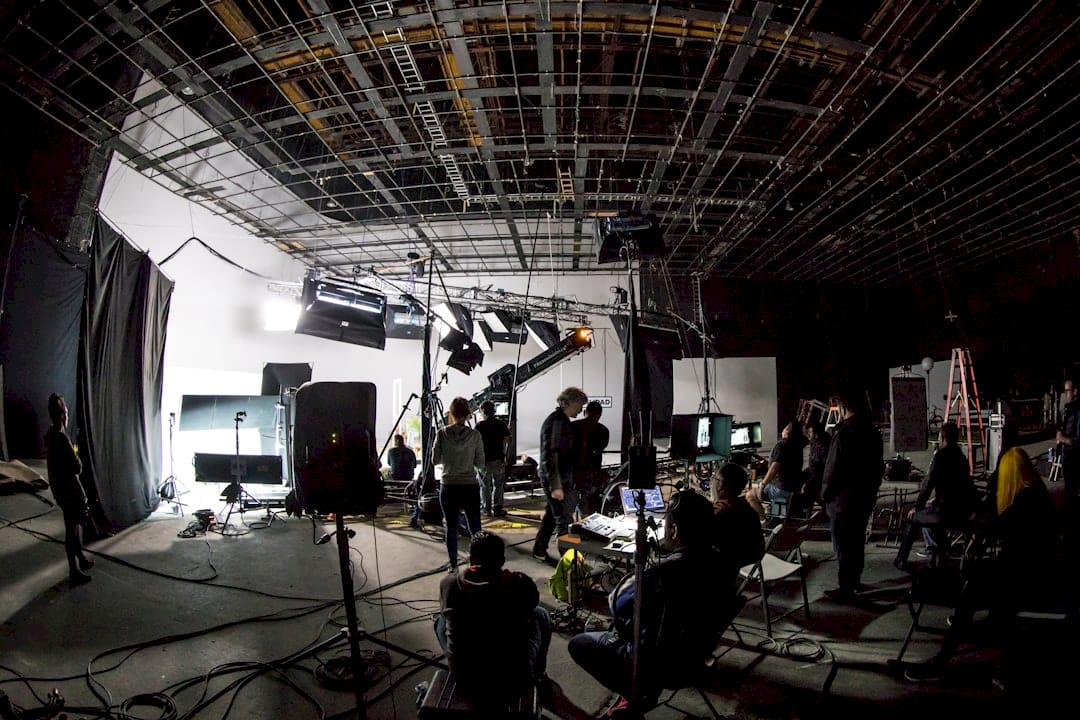
Production: filming with professional-grade equipment, managing lighting, sound, and crew
Post-production: editing, color grading, motion graphics, and audio mixing
Distribution guidance: recommending formats, aspect ratios, and platforms suited to your goals
Ongoing strategy: helping you build a content calendar and plan future productions efficiently
For Washington DC organizations, whether you are a government contractor, a nonprofit, a trade association, or a corporate brand, this kind of end-to-end video production collaboration means you are not starting from scratch every time. Before starting a video project, most teams underestimate how much strategic prep work shapes the final product. A true partner brings that structure from day one.

One-off projects vs long-term collaborations: What the data shows
Having defined what video production partners do, let’s examine how the approach you take, one-off versus long-term, drastically changes outcomes.
Here is a number worth sitting with: 63% of brand-influencer relationships in the U.S. are one-off arrangements, with YouTube showing the highest repeat collaboration rates, ranging from 36.2% to 48.9%. The pattern holds across traditional video production partnerships too. Most brands commission a video, approve it, post it, and disconnect.
“Long-term video partnerships are not a luxury. They are how brands build a recognizable visual identity that audiences actually remember.”
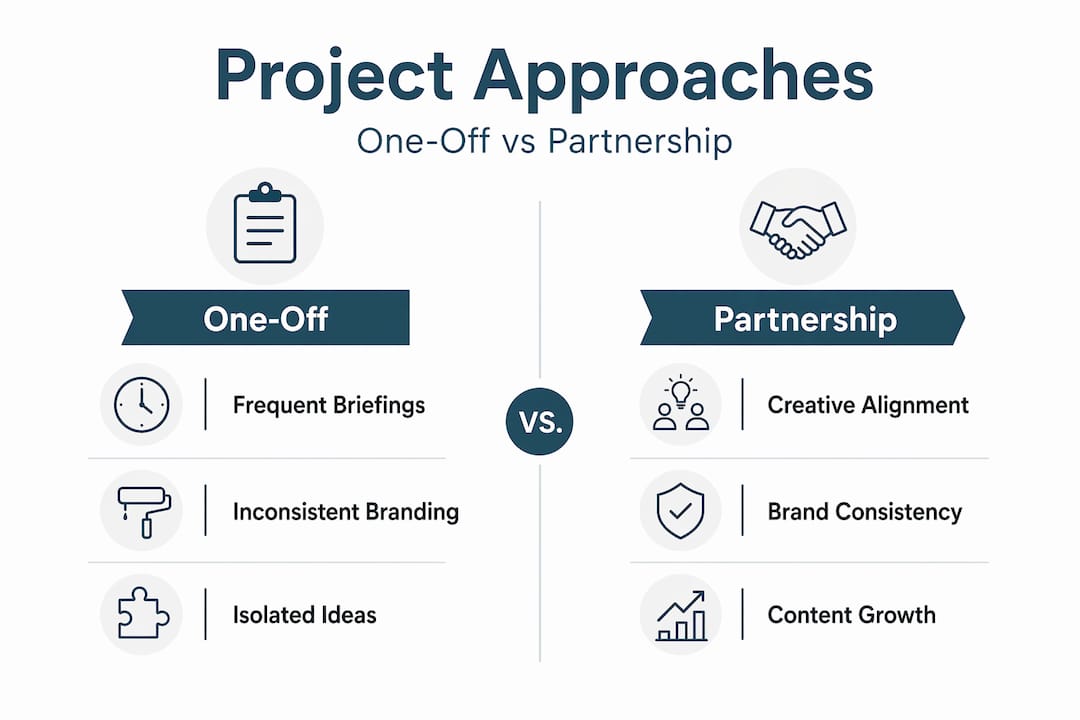
The data tells a clear story. One-off projects force you to re-brief, re-educate, and re-align every single time. You are essentially paying a learning tax on every new production. A recurring partnership eliminates that waste.
Factor | One-off project | Long-term partnership |
Creative alignment | Rebuilt each time | Deepens over time |
Brand consistency | Variable | Consistent |
Production efficiency | Lower, more setup cost | Higher, workflows are established |
ROI over 12 months | Single return | Compounding return |
Team familiarity | Starts at zero | Grows with each project |
Long-term video production collaboration also unlocks creative growth. When a production team knows your brand deeply, they stop asking basic questions and start bringing ideas you have not thought of yet. That shift from order-taker to creative contributor is where real brand storytelling value lives. If you are still on the fence about committing, understanding why you should invest in video production as an ongoing budget line, not a one-time expense, reframes the entire decision.
It is also worth studying how brands applying strong influencer marketing strategies approach long-term creative relationships for lessons that apply directly to production partnerships.
Key considerations when choosing a video production partner
Now that you understand the benefits of long-term partnerships, here is how to choose the right video production partner for your needs.
This is where many marketing managers get tripped up. They open a spreadsheet, collect three quotes, and pick the middle number. That is not a strategy. Here is what actually matters:
Portfolio depth and relevance. Does the agency have experience in your sector? A production company that excels at music videos may struggle with a government explainer or a nonprofit fundraising film. Look for work that resembles what you need.
Equipment and technical capability. Modern productions require 4K cameras, professional audio rigs, color-calibrated monitors, and editing software that handles complex multicamera timelines. Ask directly what gear they use.
Creative process and communication. How do they run a project? What does their briefing process look like? A well-run shop will have clear intake procedures, milestone check-ins, and revision protocols.
Understanding of your marketing goals. A good partner asks about audience, channel, and conversion goals before talking about cameras. If the first conversation is only about deliverables and not about objectives, that is a red flag.
Value, not just price. Selecting partners based solely on lowest price often means compromised video quality, poor production equipment, and weak creative direction. Budget matters, but it should be weighed against what you are actually getting.
Pro Tip: Ask every prospective partner to walk you through a past project from brief to delivery. How they tell that story reveals their process, problem-solving ability, and client relationship style far better than any portfolio reel.
When reviewing video production services, pay attention to the range of content types offered. A partner with experience across corporate, nonprofit, live event, and social media production will adapt to your evolving needs more naturally than a narrow specialist.
Leveraging technology and workflows for effective collaboration
Choosing the right partner is important, but understanding their technology and workflow capabilities can further shape how smoothly your collaboration runs.
The best production partners in 2026 do not just show up with good cameras. They run organized, tech-supported operations that reduce friction and keep projects on track. Here is what that looks like in practice:
AI-assisted pre-production: AI-powered note-takers during discovery calls can eliminate roughly 10 hours of manual note-writing per month, capturing creative direction accurately and preventing misalignment disputes later. That is not a small efficiency gain.
Cloud-first editing workflows: Cloud-based file streaming allows teams to work on massive files, even projects exceeding 5TB, without downloading the entire file. That eliminates the old frustration of shipping hard drives or waiting on slow uploads.
Version control and feedback tools: Modern partners use frame-accurate review platforms so you can leave timestamped comments directly on the video instead of describing a scene in a long email chain.
Structured approval workflows: Clear sign-off procedures at each stage mean fewer surprises at the end and less costly rework.
Pro Tip: When evaluating a prospective production partner, ask them how they handle remote collaboration and large file management. If they still rely on emailing files back and forth or shipping physical drives, that is a sign their infrastructure has not kept pace with the work.
These are not just nice-to-have features. They are markers of a mature operation. Knowing how to brief a video production team effectively becomes far easier when your partner has the tools and processes to capture and act on that brief accurately.
Applying your video production partnership strategically in Washington DC
Now, let’s bring all of this together and apply it to your Washington DC marketing efforts specifically.
The DC market has its own character. Government agencies, federal contractors, trade associations, nonprofits, and corporate brands all compete for attention from an audience that is informed, mission-driven, and skeptical of generic content. That context shapes what good video looks like here.
Here is how to put a video production partnership to work in this environment:
Bring your partner into campaign planning early. Do not wait until a campaign launches to commission video. The best content comes from partners who understand the campaign’s purpose from the beginning.
Match video formats to your DC audience. Think beyond the standard 2-minute brand video. Testimonials from community stakeholders, short-form event recaps for social, and explainer videos for policy or program content all serve real needs in this market.
Build a content cadence, not a content sprint. Committing to quarterly or monthly video output keeps your brand visible and gives your partner the runway to produce consistently strong work.
Align video with your broader channels. Video created for a live event can be repurposed into social clips, website content, and email campaigns. A thoughtful partner plans for this from the shoot.
The power of storytelling in brand engagement is well-documented, and in a city where credibility drives decisions, authentic video storytelling carries particular weight.
Approach | In-house production | Partner-driven production |
Upfront cost | High (equipment, staff) | Variable per project |
Creative range | Limited by team skills | Broader, specialist-led |
Scalability | Difficult for large events | Flexible and scalable |
Brand consistency | High if staffed well | High with a long-term partner |
Access to new formats | Slower to adopt | Faster with dedicated crews |
Understanding what branded video importance looks like for your specific organization, and staying current with innovative branded video campaigns, helps you set expectations and bring better creative direction to every engagement with your partner.
Why many businesses get video partnerships wrong, and how to fix it
Here is an honest observation from over two decades working with brands across the DC area: most organizations that struggle with video do not have a production problem. They have a relationship problem.
They treat video production the same way they treat printing brochures. Spec it out, get bids, pick the cheapest option, approve the deliverable, file it away. Then they wonder why the video does not move anyone.
The uncomfortable truth is that low-cost services often compromise video quality, production equipment, editing standards, and creative direction, all of which negatively impact long-term brand visibility. You can feel the difference between a video made by someone who cares about your story and one made by someone filling a work order. So can your audience.
We have seen marketing managers come to us after investing in cheap production and spending twice as much to redo content that fell flat. The math never works in favor of the bargain option once you factor in reshoot costs, missed campaign windows, and brand damage.
What works instead is investing early in a partner who pushes back constructively, asks hard questions about your audience, and brings ideas to the table before you ask. That relationship is worth paying for. It is also worth nurturing. The more your production partner understands your organization, the faster they can work and the better the output gets over time.
Strong video marketing strategies are not built on individual videos. They are built on consistent storytelling, repeated over time, by a partner who knows your brand as well as you do. That is the standard worth aiming for.
Explore professional video production services in Washington DC
If you have been reading this and thinking about what a real video production partnership could look like for your organization, we want to have that conversation.
Puritano Media Group has spent over two decades working with businesses, nonprofits, trade associations, and government-adjacent organizations across the DC metropolitan area and nationally. Our corporate video production services cover everything from initial concept through final delivery, using AI-assisted workflows and cloud-based collaboration to keep projects efficient and on brief. We also bring deep experience in music videos and virtual events for organizations that need creative range alongside production discipline. If you are ready to move from one-off projects to a real long-term partnership, let’s talk about what that looks like for your brand.
Frequently asked questions
What exactly does a video production partner do for my business?
A video production partner manages the entire video creation process, from planning and filming to editing and distribution, ensuring every piece of content aligns with your brand goals and marketing strategy rather than just fulfilling a basic deliverable.
How do long-term video partnerships benefit my marketing efforts compared to one-off projects?
Long-term partnerships build creative alignment and brand consistency over time, improving both quality and efficiency. YouTube’s repeat collaboration rates, ranging from 36.2% to 48.9%, demonstrate that sustained video relationships produce measurably better results than single engagements.
What should I avoid when selecting a video production partner?
Never choose a partner based on price alone. Low-cost services frequently compromise video quality, equipment standards, and creative direction in ways that hurt your brand’s long-term visibility and audience trust.
How can technology improve collaboration with a video production partner?
AI-powered note-takers save approximately 10 hours of manual documentation per month, capturing creative direction accurately from the start. Combined with cloud-first workflows for large files, these tools reduce delays, version conflicts, and miscommunication throughout the project.
Why should Washington DC marketers consider local video production partners?
Local partners understand the regional business environment, audience expectations, and the credibility-focused culture that shapes how DC audiences respond to brand content, enabling storytelling that resonates both locally and with national audiences.
Recommended
Comments