

What Is Event Video Storytelling and Why It Matters
Updated: May 27

Most event planners walk away with hours of footage and end up with a highlight reel that nobody watches twice. That’s not event video storytelling. It’s event video recording. Understanding what is event video storytelling means recognizing the difference between capturing moments and crafting a narrative that makes viewers feel something. The right approach transforms your event into content people share, remember, and act on. This article breaks down the core principles, practical techniques, and real benefits so you can start using video storytelling as a strategic asset.
Table of Contents
Key takeaways
Point | Details |
Storytelling vs. recording | Event video storytelling builds a narrative with structure, emotion, and purpose rather than just documenting what happened. |
Three-part narrative structure | Every effective event video follows a hook, core, and conclusion to keep viewers emotionally connected from start to finish. |
Multiple formats serve different goals | Recap videos, testimonial stories, and branded narratives each serve distinct marketing purposes depending on your audience and platform. |
Pre-production planning is critical | Defining your story theme and narrative goals before filming prevents missed shots and weak footage in post-production. |
Production expertise multiplies impact | Working with an experienced team that understands both storytelling and event dynamics produces measurably better results. |
What event video storytelling actually is
Event video storytelling is the practice of transforming raw footage into a cohesive, emotionally engaging narrative using deliberate choices in pacing, transitions, music, and structure. It is not a montage of your best clips set to upbeat music. It is a purposeful sequence that takes a viewer through an experience with a clear beginning, middle, and end.
Think of it this way. A documentary filmmaker doesn’t point a camera at a subject and press record. They decide what story they’re telling before they step foot on location. Event video storytelling works the same way. The story is planned before filming begins, captured with intention, and then shaped in the editing room to land with emotional weight.
The core components that separate storytelling from simple recording include:
Narrative structure: A deliberate arc that builds context, develops momentum, and delivers a satisfying resolution
Pacing and rhythm: The editing tempo that controls how a viewer feels at each moment of the video
Music selection: Audio that reinforces emotional tone without overpowering the story being told
Character or voice: A central perspective, whether it’s a speaker, attendee, or brand voice, that anchors the viewer
Purposeful visuals: Shots chosen because they advance the story, not just because they look good in isolation
Pro Tip: Before a single camera rolls, write a one-sentence summary of what you want viewers to feel after watching. That sentence becomes your editorial compass for every decision from filming through final edit.
The distinction matters because authentic stories rooted in human experiences outperform generic messaging when it comes to genuine audience connection. Generic event footage tells people what happened. Story-driven event video makes them wish they were there, or glad they were.
The real benefits of event video storytelling
The importance of storytelling in events extends well beyond aesthetics. When your event video is built around a narrative, it creates measurably different outcomes across multiple marketing goals.

Emotional connection and memorability. Character-driven storytelling that focuses on individual experiences creates deeper emotional connections than generic corporate messages. A 90-second video following one attendee’s journey through your conference will resonate far longer than two minutes of crowd shots and keynote clips. Emotions are what make content stick in memory, and memory is what drives future attendance, referrals, and loyalty.
Extended event reach. Your in-person event has a fixed capacity. Your video does not. Professional recap videos have become a primary marketing tool for extending event value to audiences who couldn’t attend in person. A well-produced story video turns your event into evergreen content that works for weeks or months after the event date.
The benefits of event video stack up in ways that directly support your marketing calendar:
Shareable content that extends organic reach across social channels
Assets that support email campaigns and sponsorship recaps
Video proof of event quality that increases registrations for future events
Testimonial footage that builds credibility for new audiences
Material for internal communications, board presentations, and partner reporting
Search visibility and website performance. Video content boosts website engagement and search visibility when paired with relevant titles and descriptions. Embedding a strong event story video on your event page increases time-on-site and signals value to search engines. That’s a benefit most event planners overlook entirely.
Practical event storytelling techniques that work
Knowing what event video storytelling is doesn’t automatically make your next event video better. These are the techniques that move the work from concept to execution.
Step 1: Define your core message before filming. Every strong event video answers one question: what do we want the audience to know, feel, or do after watching? A clear story theme ensures all event content, visuals, and activities align into a unified narrative experience. Without this anchor, editors face hours of footage with no editorial direction.
Step 2: Build a three-part narrative arc. A well-structured event narrative follows a hook, a core, and a conclusion. The hook grabs attention in the first few seconds. The core delivers the substance, transformation, or experience. The conclusion leaves viewers with a clear feeling or call to action. This structure applies whether you’re making a 60-second social clip or a 10-minute brand documentary.
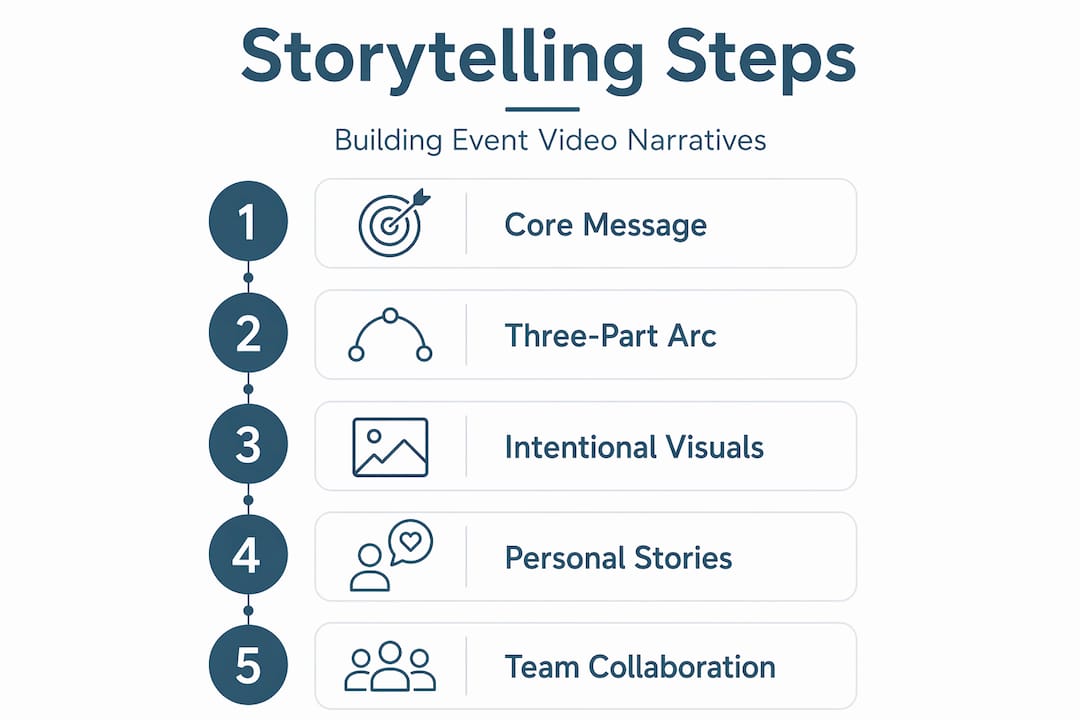
Step 3: Use visuals and setting intentionally. Design your event experience with the camera in mind. Brands that consider filming needs in their event layout see significantly stronger storytelling results on screen. Think about lighting, crowd flow, speaker placement, and background branding at the planning stage, not during setup day.
Step 4: Incorporate personal stories and audience voices. Attendee testimonials and unscripted moments are some of the most powerful story elements available to you. Plan brief on-camera interviews into your event schedule. These clips give your video a human center of gravity that no amount of production polish can manufacture.
Step 5: Collaborate with your production team early. Share your narrative goals with your video production team at the briefing stage, not the day before the event. The more context they have, the better the shots they’ll prioritize. You can learn how to brief a video production team effectively to make this collaboration work.
Pro Tip: Plan a shot list around story beats, not just event moments. For each key moment in your event narrative, identify the visual that would tell that part of the story without any words at all. If you can’t picture it, neither can your editor.
Video formats and when to use them
Not every event calls for the same storytelling format. The style you choose should match both your marketing goal and the platform where your audience will watch it. Every video should serve one of three purposes: awareness, consideration, or action. That purpose determines length, tone, and structure.
Format | Best use case | Ideal length | Platform fit |
Highlight reel | Post-event awareness and social sharing | 60 to 90 seconds | Instagram, LinkedIn, TikTok |
Narrative recap | Website feature and future event promotion | 2 to 5 minutes | Website, YouTube, email |
Testimonial story | Consideration-stage audience research | 1 to 3 minutes | Website, sales materials |
Branded narrative | Sponsor deliverables and brand campaigns | 3 to 8 minutes | YouTube, broadcast, presentations |
Live session clip | Thought leadership and search visibility | 5 to 15 minutes | YouTube, podcast, LinkedIn |
For social platforms, short-form storytelling on Instagram and TikTok depends on a strong first two-second hook, fast cuts, and a clear narrative flow that includes a moment of tension and resolution. A technically polished video without that structure will consistently underperform a simpler video that tells a real story.
You can explore social video formats in depth to match platform behavior with your event storytelling goals.
How to implement event video storytelling step by step
Understanding the principles is one thing. Actually producing a story-driven event video requires a process that runs from initial planning through post-production distribution. Here’s how to approach it.
Start with a creative brief. Document your event’s core narrative, intended audience, emotional goal, and distribution channels before speaking with any production partner. This brief becomes the north star for every creative decision.
Collaborate early with your production team. Share the brief, walk through the event program, and identify the story moments you need captured. A production team that understands the narrative goal will prioritize shots that serve the story rather than defaulting to safe but generic coverage.
Plan your onsite filming logistics. Coordinate camera positions, interview windows, and access points with your event operations team. Know exactly when and where your key story beats will happen so you don’t miss them.
Edit for emotional impact first. In post-production, the goal is not to show everything that happened. It’s to make the viewer feel the essence of the event. Cut for emotion, pacing, and clarity. The importance of storytelling in events shows up most powerfully in the editing room, where footage becomes narrative.
Distribute with purpose. Upload your video to the right platforms with optimized titles, descriptions, and thumbnails. Embed the full narrative version on your event page. Cut shorter versions for social. Share clips in post-event email sequences. Each version serves a different part of your audience’s decision journey.
Pro Tip: Create a distribution plan before the event, not after the video is delivered. Knowing you need a 15-second Instagram version, a 90-second LinkedIn cut, and a full 4-minute website version will shape what your production team captures on-site.
My take on why most event videos fail
In my experience, the most common reason event videos fall flat has nothing to do with camera quality or production budget. It’s that the video has no story to tell because nobody decided what the story was before filming began.
I’ve seen this pattern repeatedly. An event planner books a videographer, the team captures everything that moves for eight hours, and then someone in post-production is expected to find a story in the footage. That’s not a production problem. It’s a strategy problem. Intentionality in every planning decision is what separates an event video that builds real loyalty from one that gets filed away and forgotten.
The other pitfall I see often is confusing production value with storytelling. High resolution and cinematic lighting are assets. But they’re tools, not a story. I’ve watched beautifully shot videos lose viewers in the first thirty seconds because there was no narrative hook, no character to follow, and no tension to resolve. And I’ve watched rough footage move people to tears because someone had the clarity to find a real human story inside the event and let it breathe.
My honest advice: treat your event video like a short film, not a marketing deliverable. That shift in mindset changes the questions you ask in pre-production, the shots your team prioritizes on-site, and the editorial choices made in the cutting room. The result is a video that works harder and lasts longer than anything produced on autopilot.
— Charlie
Let Puritano tell your event’s story
At Puritano, we’ve spent over two decades building event stories that do real work for our clients. We understand that event video production is only as strong as the narrative behind it. Whether you’re producing a large-scale conference, a nonprofit gala, or a virtual event that needs to feel as engaging as the in-person version, our team brings editorial thinking to every project from the briefing stage through final delivery. You can see examples of our storytelling range in our music video portfolio and our virtual events work. If you’re ready to produce event video content that actually moves people, explore our full production services or reach out to start a conversation.
FAQ
What is event video storytelling in simple terms?
Event video storytelling is the process of turning event footage into a structured narrative that engages viewers emotionally. It goes beyond documenting what happened by using pacing, music, character, and story structure to make the viewer feel the experience.
How is event storytelling different from a basic recap video?
A basic recap video shows what happened. Event storytelling uses a narrative arc with a hook, core, and conclusion to create emotional engagement and a clear message. The difference shows up in how long people watch and whether they share the content.
What are the best event storytelling techniques for beginners?
Start by defining one core message before filming begins, then build your shoot around three story beats: the setup, the transformation, and the takeaway. Capture at least two or three attendee testimonials to give your story a human voice.
How long should an event story video be?
Length depends on platform and purpose. Awareness videos for social media work best at 60 to 90 seconds. Full narrative recaps for websites and YouTube typically run 2 to 5 minutes. Video length should match the viewer’s intent at each stage of the marketing funnel.
When should I hire a professional event video production team?
Hire a professional team when the event has real marketing stakes, when the footage will be used to promote future events or attract sponsors, or when the story complexity requires dedicated editorial thinking. Professional event video production pays for itself in content that continues generating value long after the event ends.
Recommended
Comments