

Why Scripting Matters in Corporate Video Production
Updated: 3 days ago

A corporate video script is the single most important document in any video production workflow. It defines what gets said, what gets shown, and in what order. Without it, even a generous budget and a talented crew cannot save a video that lacks direction. Understanding why scripting matters in corporate video is not an abstract creative concern. It is a production and business decision that directly affects your ROI, your brand reputation, and whether viewers stay or click away.
Why scripting matters in corporate video: the core case
A script is the structural foundation of every effective corporate video. Think of it the way you would a blueprint before construction. Without that plan, you end up with scattered content, confused viewers, and expensive reshoots. 92% of marketers report positive ROI when their video content aligns to clear business goals through scripting. That number tells you scripting is not a creative luxury. It is a business requirement.
The importance of video scripting shows up at every stage of production. Before the camera rolls, a script lets your team agree on the message. During production, it keeps the crew and talent on the same page. After the shoot, it reduces editing time because the footage already follows a logical sequence. Puritano has seen this play out on hundreds of projects over more than two decades. The videos that perform best are always the ones that started with a tight, purposeful script.
What are the primary benefits of scripting corporate videos?
Scripting delivers four concrete advantages that marketing professionals and corporate teams feel directly in their budgets and results.
Message clarity. A script forces you to decide what the video is actually about before production begins. Vague briefs produce vague videos. A written script exposes gaps in thinking early, when fixing them costs nothing.
Brand voice consistency. Scripts ensure consistent tone and messaging alignment across campaigns. When your company produces multiple videos across different departments or platforms, a script keeps every piece sounding like it came from the same organization.
Reduced production costs. Unscripted shoots generate far more unusable footage. Reshoots are expensive. A script eliminates most of them by defining exactly what needs to be captured.
Stakeholder alignment. Script approval streamlines production timelines by letting decision-makers review and approve the creative direction before a single dollar is spent on crew or equipment. Last-minute changes become rare because everyone signed off on the plan.
Pro Tip: Send your script to at least two stakeholders outside the production team before the shoot. Fresh eyes catch messaging problems that insiders overlook after reading the same draft multiple times.
The benefits of scripting videos compound across a campaign. One well-scripted video builds a template for the next. Over time, your team develops a repeatable process that produces consistent quality without starting from scratch each time.
How does scripting impact viewer engagement and message retention?
Viewer attention is the scarcest resource in video marketing. 33% of viewers drop off after just 30 seconds, which means your script must earn attention immediately. A weak opening is not just a creative problem. It is a direct cause of lost viewers and wasted spend.
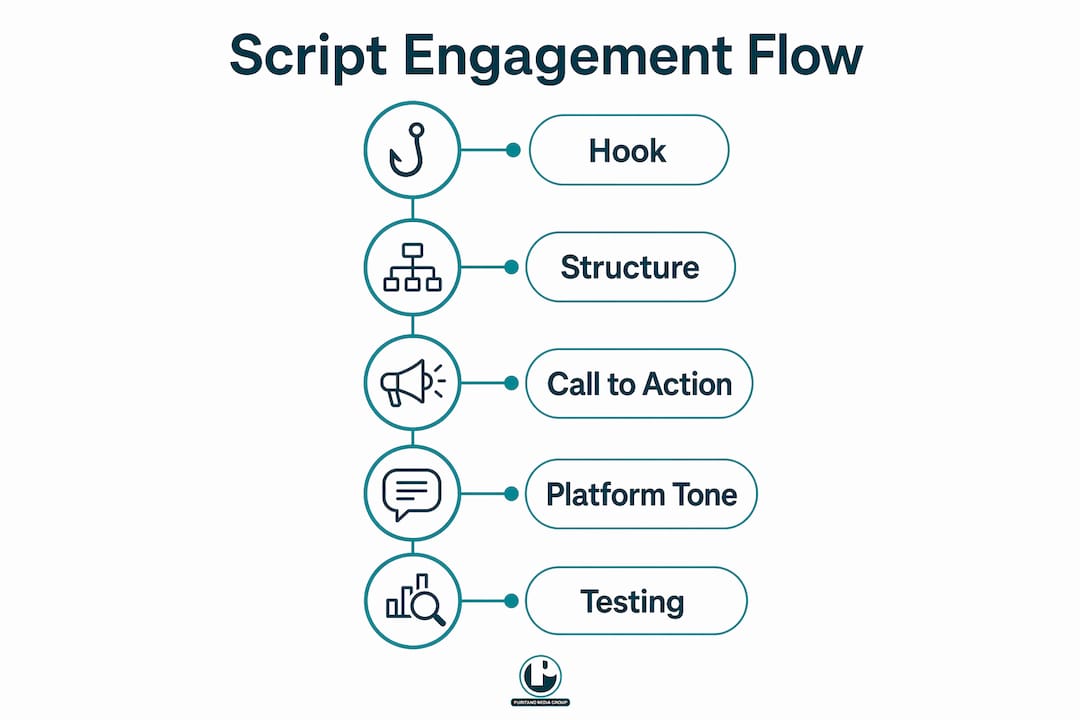
The impact of scripting on engagement operates through three mechanisms: the hook, the structure, and the call to action. A strong hook in the first five seconds gives viewers a reason to keep watching. A clear structure prevents the mental fatigue that causes drop-off mid-video. A specific call to action tells viewers exactly what to do next, which is the difference between a video that generates leads and one that generates views with no downstream value.
Platform and audience also shape how you script. A 90-second LinkedIn video for senior executives needs a different tone and pacing than a 30-second Instagram clip for consumers. The script must account for both the platform’s format and the viewer’s mindset at the moment they encounter the content. Storytelling that sustains brand engagement requires matching narrative style to audience expectations, not just delivering information.
Script Element | Purpose | Impact on Engagement |
Hook (first 5–10 seconds) | Capture immediate attention | Reduces early drop-off |
Structured body | Deliver the core message clearly | Maintains viewer focus |
Conversational language | Create natural flow and connection | Improves comprehension and retention |
Call to action | Direct viewer behavior | Drives measurable outcomes |
Pro Tip: Read your script aloud before the shoot. If you stumble on a sentence, your on-camera talent will too. Spoken scripts need a different rhythm than written copy.
What practical scripting formats and techniques optimize corporate video production?
The multi-column AV (Audio/Visual) script format is the industry standard for coordinating narration with exact visual cues. The format splits the page into two columns: one for audio (narration, dialogue, music notes) and one for visuals (shot descriptions, graphics, on-screen text). This layout prevents the most common production failure, which is audio and visuals that feel disconnected from each other.
The three-part script structure
A well-structured three-part script built around a hook, a body, and a call to action keeps videos focused and drives viewer action. The hook establishes relevance. The body delivers the core message in a logical sequence. The call to action closes with a specific next step. This framework works for corporate explainers, brand films, training videos, and product launches alike.
Writing techniques that improve production outcomes
One key message per video. Trying to communicate five ideas in two minutes produces a video that communicates none of them well. Identify the single most important thing you want viewers to take away, then build the script around that.
Write for the ear, not the eye. Corporate video scripts are spoken, not read. Short sentences, active verbs, and plain language produce natural-sounding delivery. Clear, conversational language improves viewer connection and makes on-camera talent sound confident rather than stiff.
Script the visuals alongside the audio. Deciding what appears on screen while you write the narration prevents mismatches in post-production. It also helps editors work faster because the intent is documented.
Match script length to platform. A two-minute script works for a website homepage video. A 30-second script works for a paid social ad. Forcing the wrong length onto a platform is a scripting mistake that no amount of editing can fix.
Puritano uses the AV format on every corporate project because it gives directors, editors, and clients a shared reference point throughout production. It removes ambiguity and keeps the whole team aligned on what the finished video should look and sound like.
What common scripting mistakes harm corporate videos and how to avoid them?
Poor scripting leads to wasted budget, viewer confusion, and low engagement. These outcomes are avoidable, but only if you know which mistakes to watch for before production begins.
Unfocused messaging. Scripts that try to cover too much ground leave viewers unsure what they just watched. Every sentence should serve the single core message. If a line does not support that message, cut it.
Jargon overload. Corporate teams often write scripts the way they write internal memos. Viewers outside your industry will not follow technical language, and even internal audiences disengage when copy feels like a policy document.
Weak or missing hooks. Opening a video with a company history or a product feature list is a reliable way to lose viewers in the first ten seconds. The hook must answer the viewer’s unspoken question: “Why should I keep watching?”
No clear call to action. A video without a specific next step is a missed opportunity. Whether you want viewers to visit a page, request a demo, or share the content, the script must state that explicitly.
Skipping the revision process. First drafts of scripts are almost never production-ready. Reading the script aloud, gathering feedback, and revising for clarity are not optional steps. They are the process.
Pro Tip: After your final revision, time the script by reading it at a natural speaking pace. One page of double-spaced script equals roughly one minute of finished video. Use this as a quick check before you commit to a shoot day.
Avoiding these mistakes is one of the most direct ways to protect your production budget. The common errors that kill corporate video campaigns almost always trace back to a script that was rushed, unfocused, or never properly reviewed.
Key Takeaways
A well-crafted script is the single factor that most consistently separates corporate videos that achieve business goals from those that waste budget and lose viewers.
The part of scripting most teams underestimate
Here is what I have learned after working on corporate video projects across industries for over two decades. Most teams treat the script as a formality. They write something quickly, get a fast approval, and move on to the exciting part: the shoot. That is the wrong order of priorities.
The script is where the real creative and strategic work happens. It is where you decide what your brand actually stands for in this particular video, what problem you are solving for the viewer, and what you want them to feel and do when it ends. Shooting without that clarity is expensive guesswork.
I have also seen a shift in how AI tools are entering the scripting process. Teams are using AI to generate first drafts faster, which is genuinely useful for getting words on the page. But the strategic thinking, the brand voice decisions, and the structural judgment still require a human who understands the business goal. AI can accelerate the drafting phase. It cannot replace the thinking that makes a script worth producing.
The teams that treat scripting as a brand storytelling discipline rather than a production checkbox consistently produce videos that outperform. They spend more time on the script and less time fixing problems in the edit. That is not a coincidence.
How Puritano approaches scripted corporate video production
Puritano builds every corporate video project around a scripted foundation. With more than 20 years of production experience serving clients in the Washington D.C. area and nationally, the team knows that the script is where business goals and creative execution meet. From the initial brief through stakeholder review and final production, Puritano’s process keeps the script at the center of every decision. If you want to see what that approach produces, the video production portfolio shows the range and quality of scripted work across industries. To discuss a corporate video project, reach out directly through puritano.com.
FAQ
Why is a script vital in corporate videos?
A script defines the message, structure, and visual plan before production begins. Without one, videos lack focus and viewers disengage quickly.
How does scripting affect viewer retention?
33% of viewers drop off after 30 seconds, so a script with a strong hook and clear structure is the primary tool for keeping audiences engaged through the full video.
What is the AV script format?
The AV (Audio/Visual) format is a two-column layout that maps narration and dialogue to specific visual cues. It is the industry standard format for corporate video production because it aligns the entire crew around a shared visual and audio plan.
How long should a corporate video script be?
Script length depends on the platform and audience. A website video typically runs 60–120 seconds, while a paid social ad runs 15–30 seconds. One page of double-spaced script equals roughly one minute of finished video.
Can you produce a corporate video without a script?
Unscripted videos are possible but carry significant risk. Poor scripting leads to wasted budget and low engagement, and unscripted shoots almost always require more editing time and more reshoots to produce a coherent final product.
Recommended
Our scripted work starts where this post says it should, on paper. Charlie Puritano settles the audience, the job of the piece, and the full deliverables list before production begins, and that document governs everything that follows. A script written against a defined job can be argued with, improved, and approved while changes are still cheap. One written to fill a runtime only gets argued about in the edit, when every fix costs money. The page is where a corporate video earns its budget back. The paper habit runs deep: Charlie Puritano is also a published cartoonist, whose collection Tomhead: Wahoos in My Rearview Mirror, gathering his comic strips from a University of Virginia newspaper, sold more than a thousand copies, every story told in panels before a word of it moved.


Comments