

Wardrobe for Video Shoot: How to Hire and Brief It Right
Updated: Aug 21

Hire a professional wardrobe coordinator, or partner with a full-service production company like Puritano Media Group that supplies wardrobe as part of the package. Either way, start the wardrobe for your video shoot 4 to 8 weeks before principal photography, not the week before.
Here’s what to do this week:
Confirm scope: how many talent, how many outfit changes, any chroma-key (greenscreen or bluescreen) scenes.
Schedule a wardrobe kickoff call with your stylist or wardrobe supervisor 4 to 8 weeks out.
Set a dedicated wardrobe budget line, separate from general production costs.
Ask who owns continuity logging on set, before day one, not during it.
Pro Tip: If your shoot involves greenscreen work, send your wardrobe lead the exact chroma key hex code before fittings. Guessing “avoid green” isn’t specific enough; a stylist needs the real value to rule out conflicting blues and teals too.
Key Takeaways
Professional wardrobe coordination, booked 4 to 8 weeks ahead and briefed with a written scope document, prevents the reshoots and continuity errors that quietly inflate production budgets.
Point | Details |
Book wardrobe early | Start the wardrobe kickoff 4 to 8 weeks before principal photography, not the week before. |
Match the role to the project | Use a costume designer for narrative work, a stylist for commercials, and a supervisor for continuity. |
Get deliverables in writing | Require a moodboard, outfit list, continuity log template, and backup inventory before day one. |
Build in alteration buffers | Reserve 2 to 3 weeks pre-shoot for rentals, tailoring, and fit adjustments under real lighting. |
Consider a full-service partner | Puritano Media Group folds wardrobe supervisors, fittings management, and vendor sourcing into its production packages. |
What Wardrobe Services for a Video Shoot Actually Include
Wardrobe on a professional shoot isn’t one job. It’s a small division of labor, and knowing the roles helps you scope the work correctly instead of hiring one generalist and hoping they cover everything.
A costume designer builds character through clothing. You want one when you’re shooting scripted narrative, brand mascots, or anything requiring a built persona rather than “someone in business casual.” A wardrobe stylist handles the visual language of commercials and brand shoots, and typically shapes a campaign’s look while managing the logistics that keep it running on set, according to Styled by Weathersby. A wardrobe supervisor or on-set dresser keeps continuity intact once shooting starts. Assistant shoppers and runners handle last-minute sourcing. Hair and makeup coordination, while a separate discipline, has to sync tightly with wardrobe so nothing clashes on camera.
Each role should deliver something concrete:
Mood boards and a locked color palette before fittings begin.
A scene-by-scene outfit list tied to your shot list.
A fittings schedule that matches talent availability.
Backup wardrobe for every hero costume.
A continuity log template, ready before day one.
Puritano typically folds wardrobe coordination into full production packages, which means you’re not managing a separate vendor relationship on top of everything else.
When to Hire a Wardrobe Pro vs. Going In-House
The right call depends on creative complexity, brand risk, and how many wardrobe changes you’re managing. A single-day talking-head interview with one outfit change carries almost no wardrobe risk. A five-city commercial campaign with twelve talent and three costume changes each is a different animal entirely.
Bring in a professional stylist or costume designer when:
The shoot is scripted, multi-day, or involves character development.
You’re filming a high-visibility spokesperson or executive where brand risk is real.
The production uses chroma-key, requiring careful color vetting.
Continuity spans multiple shoot days or locations.
Costumes need custom builds rather than off-the-rack pieces.
In-house wardrobe management can work for internal training videos or low-stakes talking-head content, but even then, someone should do a basic pattern and color check before the camera rolls.
Pro Tip: A wardrobe supervisor alone is usually enough for straightforward corporate shoots with one or two outfits per person. Once you’re juggling multiple looks per talent or period-specific costuming, you need a stylist or costume designer directing the plan, with the supervisor executing it on set.
How Far in Advance Should You Book Wardrobe, and What Does It Cost?
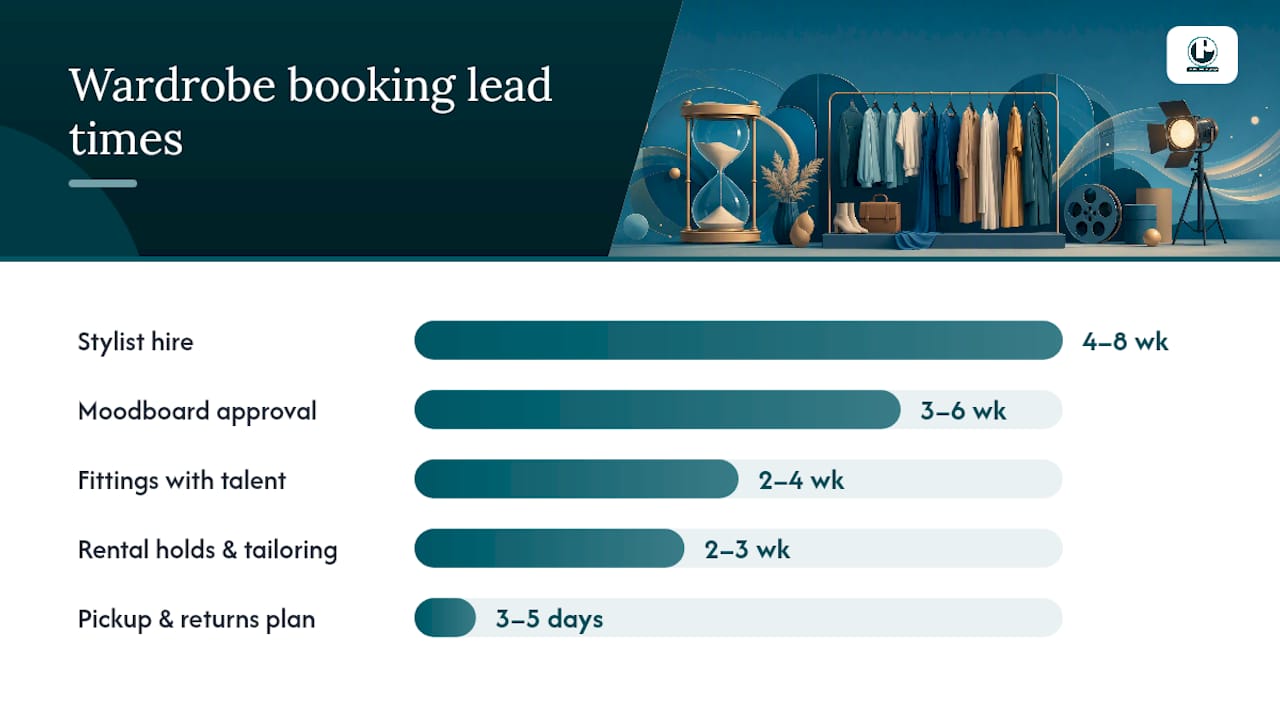
Wardrobe timelines run in parallel with the rest of pre-production, not after it. Stylist hire and the first moodboard review should happen 4 to 8 weeks before the shoot. Fittings need to land 2 to 4 weeks out, once talent schedules are confirmed. Rental holds and tailor work should be locked at least 2 to 3 weeks pre-shoot, since specialty pieces and alterations both need buffer time.
Milestone | When to Lock It |
Wardrobe kickoff and stylist hire | 4 to 8 weeks before shoot |
Moodboard and palette approval | 3 to 6 weeks before shoot |
Fittings with talent | 2 to 4 weeks before shoot |
Rental holds and tailoring | 2 to 3 weeks before shoot |
Pickup, final check, and returns plan | 3 to 5 days before shoot |
Cost swings on a few real variables: day rates for the stylist or supervisor, rental versus purchase decisions, custom builds, alteration costs, and whether you need an on-set assistant for a multi-talent day. Corporate and music-video stylists often work on day-rate structures, and complex shoots frequently require an assistant on top of the lead stylist, according to stylist Jennifer Dryden. Period pieces, custom tailoring, out-of-town travel, and large casts are the fastest ways to push a wardrobe budget from modest to significant, so flag those variables early rather than discovering them mid-fitting.
Where to Source Wardrobe: Rentals, Thrift, Bespoke, or Retail
No single source covers every need. The strongest wardrobe plans usually blend two or three of these, matching each garment to its purpose rather than defaulting to one channel for everything.
Rental houses move fast and carry deep inventory, but popular sizes and styles get held by other productions during busy seasons.
Specialty costume shops are strong for period pieces and built characters, though pricing runs higher than general rental.
Thrift and consignment deliver unique texture and character on a tight budget, but sizing is inconsistent and duplicates aren’t guaranteed if something tears.
Bespoke tailors are the right call for hero pieces needing a precise fit or a period silhouette, but they need the longest lead time of any option.
Retail purchase makes sense when the brand needs to own the wardrobe outright or reuse it across future shoots.
A smart approach leans on rental houses for baseline inventory, select thrift finds for texture, and bespoke tailoring reserved for hero pieces, balancing budget against distinctiveness.
Pro Tip: Always build in a garment alteration buffer, even for rentals. A blazer that fits at the store fitting can sit differently under stage lighting or with a lav mic taped underneath, and you want two days of slack before the shoot, not two hours.
How Do You Brief and Hire the Right Wardrobe Professional?
A written brief is the single biggest predictor of whether wardrobe runs smoothly or turns into a source of last-minute chaos. Verbal instructions get lost between the creative director, the stylist, and the talent. A documented brief keeps everyone aligned before the first fitting.
Your brief should cover:
Creative objective and brand guidelines, including any color restrictions.
Character or persona notes if talent is playing a role rather than appearing as themselves.
The shot list or scene list, tied to specific outfit changes.
Functional needs like stunts, choreography, or extended physical movement.
Chroma-key notes if any scenes use greenscreen or bluescreen.
Budget, schedule, and confirmed fittings windows.
Once you’ve hired a stylist, insist on these deliverables in writing:
A scene-by-scene outfit list matched to your shot list.
Size and backup inventory for every hero look.
A continuity log template, populated as fittings happen.
A fittings schedule that respects talent availability.
A return and handling plan for rentals and borrowed pieces.
When interviewing candidates, ask about comparable commercial or narrative experience, request a sample continuity log, and ask which rental houses or vendors they work with regularly. A stylist who functions as both a creative partner and an on-set problem solver typically shows up with an emergency kit and existing vendor relationships already in place, not scrambling to build them mid-project.
Watch for red flags: no on-set experience, no continuity examples to show you, no backup plan if a rental falls through, resistance to putting deliverables in writing, or no basic awareness of how lighting and camera lenses read fabric and color differently than the naked eye.
On-Set Wardrobe Management and the Continuity Checklist That Saves Reshoots
Wardrobe work doesn’t end once fittings are locked. Shoot day is where continuity either holds together or falls apart, and the difference usually comes down to whether someone is tracking details in real time.
A wardrobe area on set should be stocked and organized before talent arrives: inventory tags on every piece, a steamer and lint roller within reach, and a clear system for quick changes between takes and scenes.
Your shoot-day continuity checklist should cover:
Label, photograph, and log every outfit before it goes on camera.
Note accessories and exactly how they’re placed, down to which wrist a watch sits on.
Track undergarments and footwear, since they’re easy to forget and hard to fix in post.
Log any visible wear, stains, or damage that happens on camera, scene by scene.
Keep an emergency kit on hand: safety pins, fashion tape, fabric glue, a portable steamer, spare garments in the right sizes, and smear-proof makeup touch-up supplies. Fabric choice matters too. Shiny fabrics and small repeating patterns can create moiré or glare on camera, so check every outfit on a monitor before you commit to it.
Pro Tip: A binder clip hidden behind the back of an outfit holds a loose waistband far better than a safety pin, and it survives movement without poking through. If a repair takes more than sixty seconds, swap to the backup instead of fixing it live. Nobody remembers a fast wardrobe swap; everyone remembers a fifteen-minute delay.
Wardrobe Fittings and Talent Scheduling: Where Delays Actually Happen
Fittings fail for one reason more than any other: nobody locked the talent’s calendar before locking the fitting date. A stylist can have the moodboard finalized and rental holds confirmed, but if your spokesperson’s schedule shifts, the whole sequence slides.
Build fittings 2 to 4 weeks before the shoot, and confirm talent availability before that window opens, not after. For multi-talent productions, stagger fittings across a few days rather than cramming everyone into one afternoon. That gives your stylist room to make adjustments between sessions instead of discovering a sizing problem an hour before the shoot.
Fittings should happen under conditions close to the actual shoot: similar lighting where possible, and a check for how fabric moves if the talent will be walking, gesturing, or sitting for long stretches. A jacket that looks sharp standing still can pull strangely on camera during a seated interview.
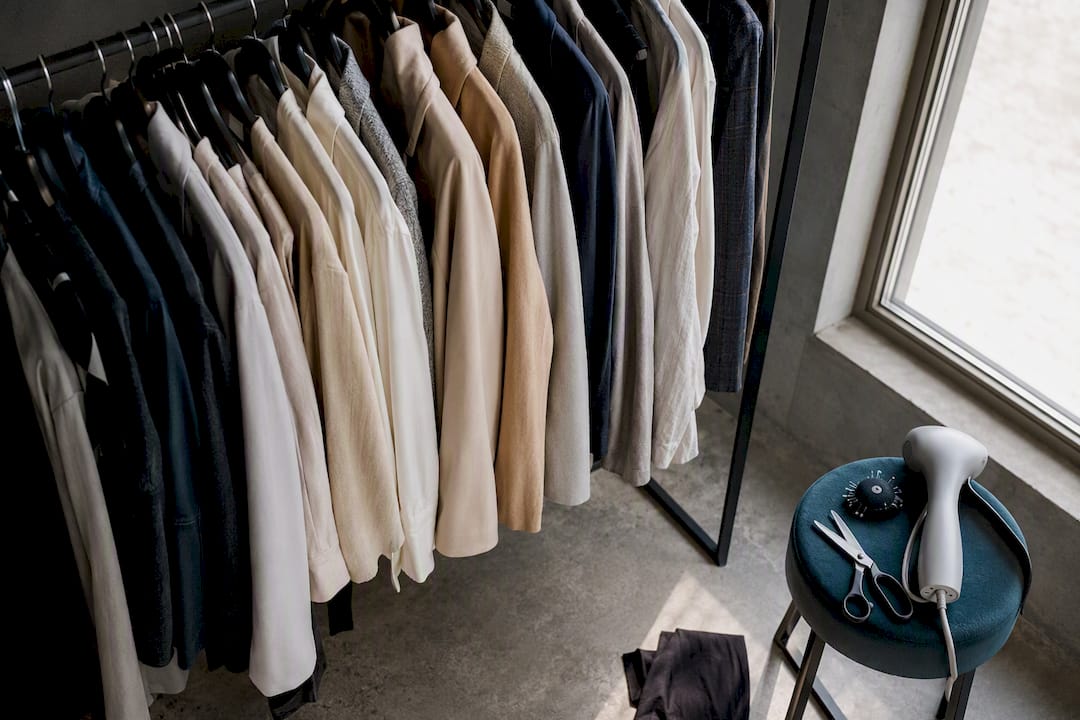
For executives and spokespeople with limited availability, build a single combined session that covers wardrobe, hair, and makeup consultation together. That’s one calendar block instead of three, and it respects the reality that senior talent often has the least flexible schedule on the entire production.
Whoever runs your fittings should leave with sign-off, not a tentative maybe. Photograph the approved look from multiple angles, log sizing notes, and confirm the outfit against your shot list before the fitting ends. That single step prevents the most common wardrobe delay: discovering on shoot day that the approved outfit was never actually confirmed.
Managing Wardrobe Across Commercials, Narrative Films, and Documentaries
Wardrobe strategy shifts depending on the format, and treating every shoot the same way is where budgets get wasted.
Commercials run on tight timelines and heavy brand scrutiny. Wardrobe needs to be on-brand, camera-tested, and often multiplied across several outfit changes per talent within a single day. Continuity matters less across days here and more within the shoot itself, since most commercials wrap in one to three days.
Narrative films demand the deepest wardrobe planning of any format. Costume design has to track character arcs, and continuity has to hold across shoot days that might be scheduled out of story order. This is where a dedicated costume designer earns their budget line, building looks that evolve with the story rather than staying static.
Documentaries carry a different challenge: subjects wear their own clothes, which means wardrobe’s job shifts from designing outfits to managing what’s already there. That still requires oversight. Someone should check patterns and colors against the shoot environment, flag anything that will clash with the background or lighting, and track what a returning subject wore in a previous session so multi-day interviews stay visually consistent.
Matching your wardrobe approach to the format, rather than applying one generic plan across all three, is what keeps the visual result matching the production’s actual goals.
What Early Wardrobe Planning Actually Saves You
Every reshoot I’ve seen tied to wardrobe traces back to a decision made too late, not a decision made badly. Locking wardrobe early gives clients something to approve before the shoot instead of reacting to it after. Full-service integration, the kind Puritano brings after two decades in production, means wardrobe isn’t a bolt-on vendor. It’s part of the plan from day one.
How Puritano Media Group Handles Wardrobe for Your Next Shoot
You don’t need to manage a separate wardrobe vendor on top of your production company. Puritano folds wardrobe coordination directly into full production packages, from on-set wardrobe supervisors to fittings management and vendor sourcing for rentals and specialty pieces. That means one point of contact instead of three, and one team that already knows your shot list, your brand guidelines, and your shoot-day schedule.
With over two decades producing commercials, branded content, and music videos for clients across the DMV region and nationally, Puritano can scale a wardrobe team up or down depending on whether you’re running a single-talent interview or a multi-day narrative shoot with a full cast.
If your next project needs wardrobe handled as part of the production, not chased down separately, request a wardrobe-inclusive quote from Puritano or ask to view portfolio examples where styling was part of the deliverable. Reach out to schedule a wardrobe kickoff conversation before you lock your shoot dates.
Frequently Asked Questions
How much does a wardrobe stylist cost for a video shoot? Costs vary by day rate, whether garments are rented or purchased, and whether an assistant is needed for multi-talent days. Complex commercial and music-video shoots often require both a lead stylist and an assistant on set.
Do I need a costume designer or a wardrobe stylist? Choose a costume designer for scripted narrative work that requires building character through clothing. Choose a wardrobe stylist for commercials and brand shoots focused on visual identity rather than character arcs.
What should I avoid wearing on camera for chroma-key shoots? Avoid any color matching or closely resembling your greenscreen or bluescreen hex value, along with shiny fabrics and small repeating patterns that can create glare or moiré on camera.
How far in advance should fittings happen before a shoot? Schedule fittings 2 to 4 weeks before the shoot date, and confirm talent availability before locking that window, not after.
Can a production company handle wardrobe as part of the shoot package? Yes. Full-service companies like Puritano Media Group integrate wardrobe supervisors, fittings coordination, and vendor sourcing directly into production packages, rather than requiring a separate wardrobe vendor.
Sources
Recommended


Comments