

Publish Your Event Sizzle Reel Social Cut in 48 Hours
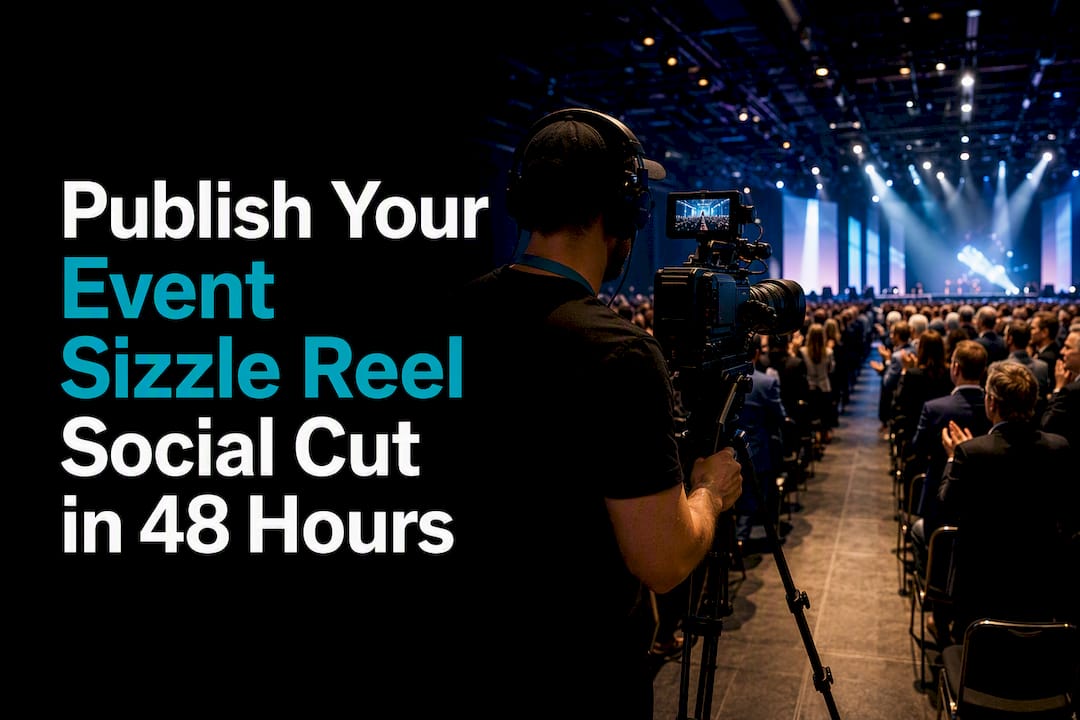
An event sizzle reel is a short, high-energy highlight video, usually 15 to 120 seconds, built to create buzz and momentum around an event. Organizers use it as a pre-event teaser, an immediate post-event social share, or a sponsor deliverable that proves the room was electric. The best ones sell a feeling in under a minute, not a full recap of everything that happened.
What Is an Event Sizzle Reel, Really?
A sizzle reel and an event recap video are cousins, not twins. A sizzle reel is a high-energy highlight video, typically 60 seconds or less when it’s built for social feeds, and it sells emotion over explanation. A recap video runs longer, often two to four minutes, and carries more narrative context: who spoke, what was announced, why it mattered. A brand film is longer still, usually built for a website hero section or a sales deck, and leans on story structure more than pure energy.
Here’s how the three differ in practice:
Sizzle reel: 15 to 90 seconds, built for Instagram, LinkedIn, or a pre-event teaser email. Pure momentum, minimal narration.
Recap video: 60 seconds to 4 minutes, used for email newsletters, YouTube, or a “thank you for attending” follow-up.
Brand or sponsor film: 3 to 6 minutes, used on websites or in stakeholder decks, with fuller storytelling and interview soundbites.
Knowing which one you’re commissioning matters before you ever pick up a camera. A conference director asking a vendor for “a sizzle reel” but expecting a five-minute sponsor documentary is setting up a mismatch that costs everyone time and budget.
What Makes a Great Event Sizzle Reel
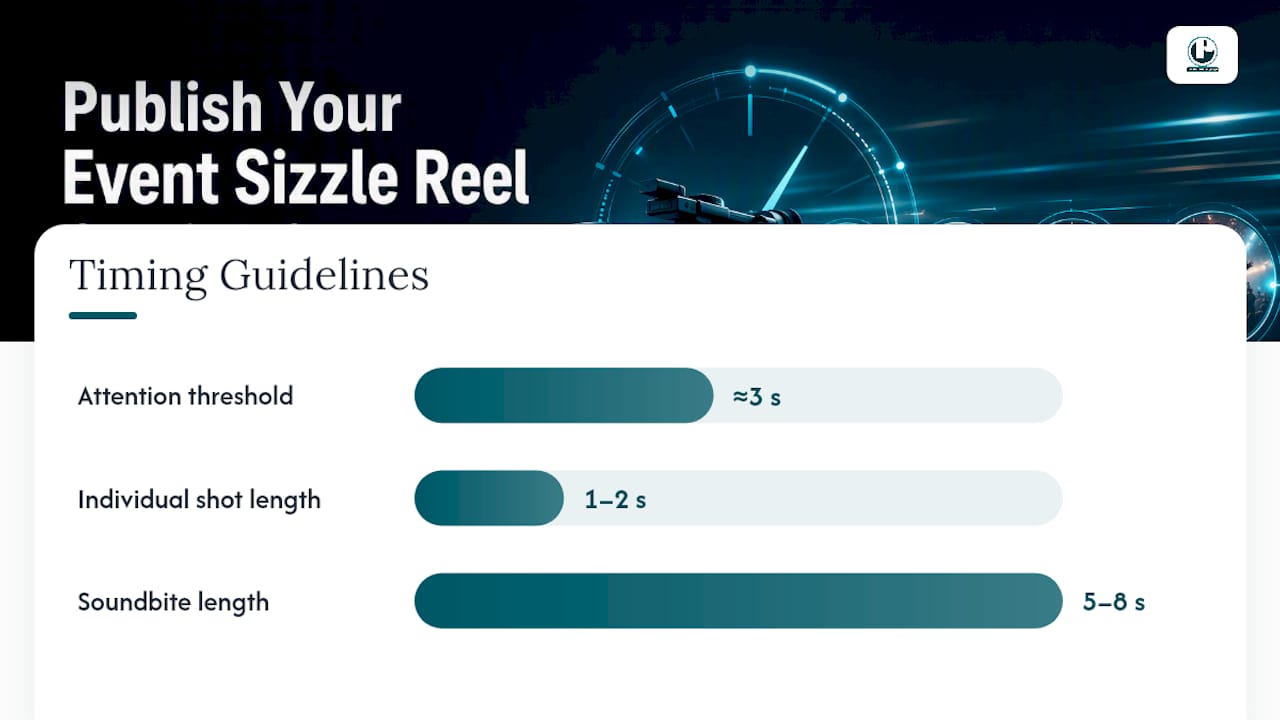
The strongest event sizzle reels front-load their best material. Open on the loudest applause, the biggest laugh, or the most striking visual you captured, not on a logo card or a slow establishing shot. You have roughly three seconds before a scrolling thumb decides whether to keep watching, and a weak opener loses that battle instantly.
A great sizzle reel also commits to one feeling. Trying to communicate “we had great keynotes AND a lively expo hall AND an amazing party AND strong sponsor visibility” in 60 seconds usually produces a reel that says nothing clearly. Pick the single emotional note, whether that’s excitement, credibility, or connection, and let every shot serve it.
Pacing and music do the heavy lifting here. Cut on the beat, keep individual shots to a second or two, and never let a clip linger past the point it’s earning its place. Every frame should feel necessary. That discipline is what separates a tight sizzle from a loose montage that overstays its welcome.
Consider these creative essentials when you’re planning or reviewing a cut:
Lead with your strongest visual or soundbite, not a slow build.
Anchor the edit to one emotional throughline, not five competing messages.
Match cut rhythm to the music’s tempo rather than fighting it.
Use short soundbites (five to eight seconds) from real attendees or speakers sparingly, mixed with music-only stretches.
Keep captions burned in for sound-off viewing, and place key text inside the safe area so nothing gets clipped on mobile crops.
Accessibility isn’t an afterthought here either. Readable captions and properly placed on-screen text matter for reach and, for government or institutional clients, for meeting accessibility standards that public-facing content is expected to follow. Puritano’s own guidance on Section 508 video compliance covers the caption and contrast basics worth building into your export template from day one.
Pro Tip: Build your music selection before you edit a single frame. Cutting to a locked track from the start keeps your pacing honest instead of forcing the music to awkwardly fit picture later.
How Do You Plan Shot Coverage Before the Event?
Every great sizzle reel is won or lost before the event starts. Pre-produced planning and a clear run-of-show map are what keep a valuable moment from slipping through uncaptured while your crew is busy elsewhere.
Start with the run-of-show itself. Walk through the agenda and mark every moment that has to appear on camera: doors opening and crowd arrival, the opening keynote, any sponsor-branded segment, award presentations, and the closing moment where energy peaks one last time. If it’s not marked, don’t assume your crew will catch it by instinct alone.
From there, build out four planning pieces:
A people list. Identify speakers, VIPs, and sponsor representatives who need to be captured on camera, along with a single approval contact for each sponsor deliverable.
Coverage roles. Assign a lead camera on the main stage, a roaming shooter for crowd and candid moments, and a dedicated audio operator if you’re planning to use live soundbites.
A consent plan. Confirm the venue’s photo and video policy in writing and know how attendees are notified they may appear on camera, especially for events with a public or minor-attendee component.
A file-handoff plan. Decide on a naming convention and ingest process before day one so footage moves from card to editor without a bottleneck.
That last piece sounds administrative until you’re trying to deliver a same-day cut and half your footage is sitting on an unlabeled card in someone’s bag. A disciplined coverage map and file-naming system is frequently the actual difference between hitting a 48-hour deadline and missing it. Puritano’s breakdown of videography crew roles for event documentation goes deeper on how to structure a multi-camera team for exactly this kind of coverage.
What Shots Should Your Crew Prioritize On-Site?
Once cameras are rolling, the goal shifts from planning to volume and variety. A sizzle reel edit needs options, and options come from a crew that knows which shots matter most.
Five shot types consistently make the cut:
Establishing shots of the venue, signage, and crowd flow that set scale and context in one or two seconds.
Crowd energy shots, wide and tight, that capture applause, laughter, or a room on its feet.
Speaker moments, framed tight enough to read facial expression but wide enough to catch a gesture.
Candid interactions between attendees, sponsors, and staff, which almost always outperform posed shots.
Detail inserts, like signage, branded swag, or a hand reaching for a badge, that add texture between bigger moments.
Individual shots should typically run one to three seconds in the final edit, so shoot more coverage than you think you need. Grab multiple takes of any moment that matters. A single clean angle of a big applause moment is useful; three angles of the same applause moment is what actually gives an editor room to build rhythm.
Audio deserves equal attention. Capture clean ambient sound throughout, and if you’re planning to use soundbites, get a dedicated lav or shotgun mic on speakers rather than relying on camera-mounted audio. Shoot in a format that supports both vertical and horizontal delivery, or plan your framing with enough headroom to crop later. Multi-platform delivery almost always means at least a 9:16 vertical cut and a 16:9 horizontal cut from the same footage.
A quick workflow habit that pays off: have each shooter flag their best three or four clips at the end of each session, verbally or with a simple tap-to-mark on the card. It cuts an editor’s search time dramatically when the deadline is measured in hours, not days.
How Long Does It Take to Edit and Publish a Sizzle Reel?
Most productions benefit from a three-cut package rather than a single video trying to serve every audience. A three-cut workflow, short social cut, social/recap cut, and a longer recap or sponsor cut, lets each deliverable match its actual distribution channel instead of forcing one video to do three jobs.
Here’s how the package typically breaks down:
Social cut (15 to 60 seconds). Fast, music-driven, minimal text. Built for Instagram Reels, TikTok, and LinkedIn.
Recap cut (60 to 120 seconds). A slightly fuller story with one or two soundbites, used for the event recap email and YouTube.
Sponsor or speaker cut (2 to 4 minutes). Longer, with named soundbites and sponsor branding placement, delivered directly to stakeholders.
Turnaround expectations matter as much as the edit itself. Publish the social cut within 48 hours of the event if at all possible; that window is when attendee engagement and algorithm reach are both at their peak. The polished recap and sponsor cuts can follow in about five to ten business days without losing meaningful momentum.
Structurally, a strong edit opens cold on your best moment, moves through two or three distinct emotional beats, and closes on a branded card with a clear next step, whether that’s a save-the-date or a link to register. Weave soundbites in during the middle beats, never at the very open or close, where pure visual energy works better. Export in both vertical and horizontal formats, and burn in captions before you deliver, since sound-off viewing is now the default on most social platforms. Track basic view and completion metrics on the social cut once it’s live. That data tells you which moments resonated and should get more coverage next time.
What Do Strong Sizzle Reel Examples Have in Common?
Curated galleries from conference organizers offer a genuinely useful benchmark. TEDx event sizzle collections demonstrate tight pacing and disciplined clip selection that most corporate events can learn from directly, even outside the speaker-conference format.
A pre-event teaser reel typically leans hard on past-event footage and a fast-cut montage to build anticipation, with almost no dialogue. A sponsor-facing recap, by contrast, usually opens the same way but slows down mid-reel to let a named soundbite land, giving sponsors something quotable for their own marketing. A same-day social cut splits the difference: fast open, one visual beat of pure energy, and a branded close, published while attendees are still checking their phones.
What’s worth copying from each: the hook timing, the restraint on soundbite length, and the music choice matched to actual event tone rather than a generic stock track. Creative direction resources on visual storytelling for brand impact offer solid supporting frameworks for choosing which moments carry that emotional weight.
How Puritano Approaches Event Sizzle Reels
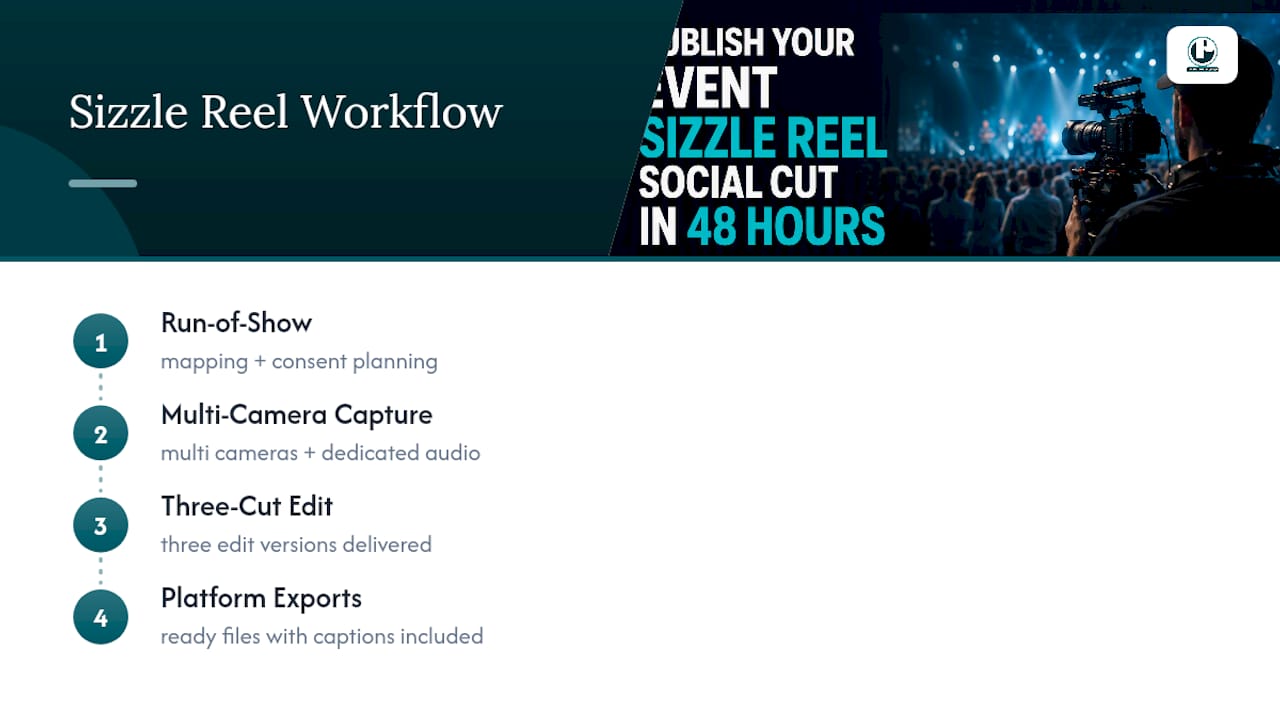
A company with extensive experience in live event coverage works with associations, agencies, and government clients who need footage that performs, not just footage that exists. Our checklist follows the same four stages covered here: run-of-show mapping and consent planning, multi-camera capture with dedicated audio, a three-cut edit package, and platform-ready exports with captions built in from the start.
How Puritano Can Help With Your Next Event Sizzle Reel
There are other paths to a finished sizzle reel: an in-house marketing coordinator with a camera, a freelance shooter hired for the day, or a general-purpose video editor working from whatever footage shows up. Each can work, but each also puts the planning, the coverage roles, and the turnaround pressure squarely on your team’s shoulders.
Some professional video production companies build the run-of-show map and coverage plan beforehand, bring a multi-camera crew experienced in prioritizing key shots, and deliver a quick-turn social cut alongside longer recap and sponsor versions, formatted for multiple platforms. For virtual or hybrid events, our virtual events production work shows the same quick-turn editing approach applied to livestream and remote-attendee formats.
To get an accurate quote, come ready with your run-of-show, estimated attendee count, and the deliverables you need (social cut, recap, sponsor versions, or all three). If you want a sense of production style and pacing first, our music video portfolio shows the same rhythm-driven editing approach we bring to live event coverage. Reach out through Puritano’s contact form to start that conversation before your next event lands on the calendar.
Sources
FAQ
What Should an Event Sizzle Reel Include?
A strong sizzle reel includes a high-energy opening shot, crowd and speaker moments that support one clear feeling, tight music-driven pacing, and burned-in captions for sound-off viewing. Sponsor deliverables typically add a named soundbite and branded close.
Can You Give an Example of a Sizzle Reel?
A typical example is a short conference teaser, often around 15 to 90 seconds, that opens on a crowd reaction shot, cuts rapidly through keynote and networking moments to an upbeat track, and closes on event branding and a registration link. TEDx sizzle collections offer publicly viewable examples of this structure.
What Is the Point of a Sizzle Reel?
Its purpose is to create buzz and drive action, whether that’s ticket sales for next year’s event, social engagement right after the current one, or a sponsor asset proving audience energy and reach.
How Much Does It Cost to Make a Sizzle Reel?
Cost varies widely based on crew size, number of cameras, and turnaround speed, since a same-day social cut requires different staffing than a polished multi-cut package delivered over a week. Puritano scopes pricing per project based on run-of-show complexity, attendee count, and the number of deliverables requested.
Recommended


Comments