

The Role of Videography in Event Documentation
Updated: 3 days ago

Videography in event documentation is the professional practice of capturing live events on video to preserve, promote, and extend their impact beyond the room. Where photos freeze a single moment and written recaps flatten the energy, video records the full experience: the speaker’s delivery, the crowd’s reaction, the atmosphere that makes an event worth attending. The role of videography in event documentation has grown from a nice-to-have into a core production decision for planners who want their events to generate value long after the last guest leaves. Professional event video production draws on tools like 4K cinema cameras, wireless lavalier microphones, and multi-camera setups to deliver content that is both technically sound and emotionally compelling.
How videography enhances event reach and audience engagement
Video is the most shareable format in digital media. Videos are shared 1,200% more than text and images combined. That number means a single well-produced event highlight reel can reach an audience many times larger than the people who attended in person.
The reason video outperforms static content comes down to what it communicates. A photograph shows a speaker at a podium. A video shows the pause before a key point, the laughter from the audience, and the energy in the room. High-quality event video captures human-centered energy that builds trust with viewers who were not there. That trust converts into registrations, sponsorships, and brand loyalty for future events.
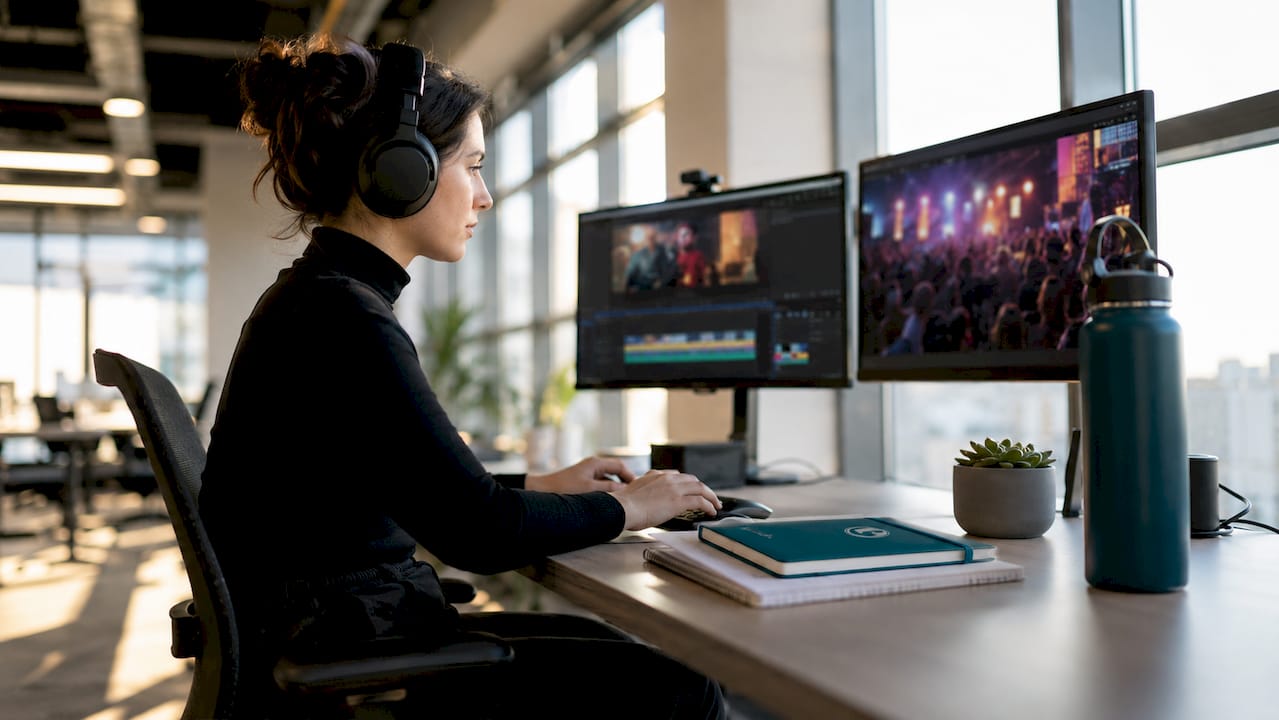
Video content also supports your marketing calendar well past the event date. A 90-second highlight reel works on LinkedIn. A three-minute recap works in an email campaign. A full session recording works as gated content on your website. Video embedded on websites improves SEO ranking and increases time on site, which signals quality to Google’s algorithm. One event shoot can feed months of content across multiple channels.
The benefits of event videography compound when you treat video as a marketing asset, not just a record. Events that invest in professional coverage consistently build stronger brand authority and drive measurable conversions over time.
What types of event videos should you produce?
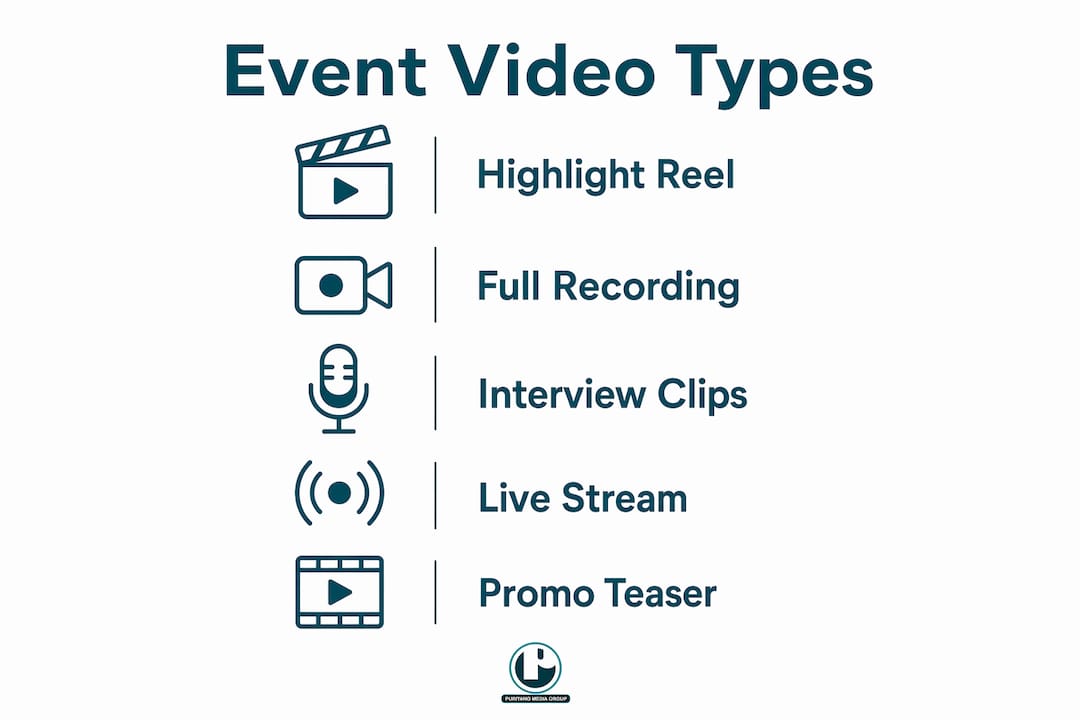
Different video formats serve different goals. Choosing the right type before production begins saves budget and produces more usable content. Here is a breakdown of the five formats most event planners use.
Different event video types serve specific purposes: highlight reels maximize shareability, full recordings support internal use, and promotional videos drive pre-event marketing. Mixing formats gives you coverage for every stage of the event lifecycle.
A conference with 500 attendees needs a different approach than a 50-person product launch. Large conferences benefit from full session recordings and a polished highlight reel. Smaller events often get more mileage from a tight two-minute recap and a set of social clips. The best event video strategies combine quick social content with polished highlight films to cover all audience engagement needs.
Pro Tip: Brief your videographer on the three most important moments in your event schedule before production day. Knowing which keynote, announcement, or networking segment matters most lets the crew prioritize coverage when time is tight.
For a deeper look at how these formats play out in practice, Puritano’s guide to live event coverage types walks through seven specific options with real-world context.
Best practices for professional event video production
Good event video does not happen by accident. It requires planning, the right crew, and a clear understanding of what the footage needs to accomplish.
Align video goals with event goals before production day. Early collaboration between videographers and event planners improves coverage quality and video effectiveness. Share your run-of-show, speaker list, and key messaging with your video team at least two weeks out.
Invest in professional audio. Poor audio is the fastest way to make a well-shot video unwatchable. Wireless lavalier microphones on speakers, a dedicated audio feed from the house system, and a sound check before doors open are non-negotiable. Puritano’s audio setup guide covers the technical side in detail.
Use a dedicated video team. Professional video production ensures consistent visual quality, structured storytelling, and professional audio recording. A team focused solely on video captures moments that a photographer doubling as a videographer will miss.
Plan your lighting in advance. Venue lighting is rarely designed for video. Bring supplemental lighting for interview setups, speaker close-ups, and any branded moments you know will appear in the final edit.
Capture b-roll throughout the event. Crowd reactions, registration tables, signage, and candid conversations give editors the material they need to build a compelling narrative. Without b-roll, a highlight reel is just a series of talking heads.
Pro Tip: Ask your venue for a technical walkthrough 48 hours before the event. Knowing the ceiling height, ambient light sources, and available power drops prevents surprises on production day.
The importance of videography in event planning is not just about the camera. It is about treating video as a production discipline with its own timeline, crew, and deliverables.
How to leverage event video content after the event
The shoot is finished. Now the real work begins. Videos can be repurposed for social media, email marketing, internal communications, and sponsorship materials, extending event ROI well beyond the event date.
Here is how planners get the most out of their footage:
Social media: Post a 60-second highlight clip within 48 hours of the event while audience interest is still high. Follow up with speaker quotes, short clips from sessions, and behind-the-scenes moments over the next two to four weeks.
Email campaigns: Embed a recap video in your post-event thank-you email. Video in email increases click-through rates and gives attendees a reason to share the message with colleagues.
Website content: Upload full session recordings as gated content to capture leads. A conference with strong speakers can generate months of organic traffic from people searching for those topics.
Sponsorship materials: A polished highlight reel showing brand placement, audience size, and event energy is one of the strongest tools for renewing or upgrading sponsorships.
Internal communications: For corporate events, full recordings of training sessions, town halls, or product launches give teams who could not attend access to the same information.
In digital-first marketing, video is often the first point of connection between a brand and a new audience. Your event video is not just a record of what happened. It is the version of your event that most people will actually see.
For D.C.-area planners looking at specific formats, Puritano’s event recap video guide shows what effective post-event content looks like in practice.
Key takeaways
Professional event videography is the single most effective way to document, promote, and extend the value of any live event across every channel.
What 20 years of event shoots taught me about planning
Here is something I have seen repeatedly: planners spend months on logistics and 48 hours on video. The result is footage that documents what happened but does not tell a story anyone wants to watch.
The shift happens when you bring the videographer into the planning conversation early. Not as a vendor who shows up on the day, but as a creative partner who understands the event’s purpose, the audience, and the moments that matter most. When that happens, the video does not just capture the event. It becomes the best argument for attending the next one.
I have also watched the industry change significantly. Ten years ago, a highlight reel was a bonus. Now it is often the primary deliverable. Sponsors ask for it. Speakers share it. Attendees tag themselves in it. The video in event marketing conversation has moved from “should we do this?” to “how do we do this well?”
The technology has improved too. Mirrorless cameras, compact gimbal stabilizers, and cloud-based editing workflows mean a two-person crew can produce broadcast-quality content at a fraction of what it cost five years ago. But the technology is not the hard part. The hard part is event video storytelling: knowing which moments carry emotional weight and building a narrative around them. That skill does not come from gear. It comes from experience.
My honest advice: budget for video the same way you budget for catering. It is not optional if you want the event to have a life beyond the room.
Work with Puritano on your next event
Puritano Media Group has spent over two decades producing professional event video for corporate clients, associations, nonprofits, and government organizations across the Washington D.C. area and nationally. We handle everything from multi-camera live event coverage to polished highlight reels and social content packages. If you are planning a conference, product launch, annual meeting, or hybrid event, we can scope a video production plan that fits your goals and budget. For organizations running virtual or hybrid formats, our virtual event production services cover the full technical and creative workflow. Reach out to Puritano and let us build a video strategy that makes your event work harder.
FAQ
What is the role of videography in event documentation?
Videography in event documentation captures live events on video to preserve key moments, support marketing, and extend event reach beyond the audience in the room. Professional coverage produces content that can be repurposed across social media, email, websites, and sponsorship materials.
How does event videography differ from event photography?
Photography captures still moments, while videography records motion, audio, and atmosphere over time. Video communicates energy and narrative in ways that static images cannot, making it more effective for audience engagement and post-event promotion.
What types of videos should I produce for a corporate event?
The most useful formats for corporate events are a highlight reel for social sharing, full session recordings for internal archives, and short social clips for LinkedIn and email campaigns. Professional event videos also capture presentations and panel discussions that are valuable for training and stakeholder communications.
How early should I involve a videographer in event planning?
Involve your videographer at least two to four weeks before the event. Early collaboration between videographers and event planners improves coverage quality and ensures the video team understands the event’s goals, schedule, and key moments.
Can event videos improve my website’s SEO?
Yes. Embedding video on your website increases time on site and improves user experience, both of which Google’s algorithm rewards with higher search rankings. A single event recap page with embedded video can generate organic traffic for months after the event.
Recommended
Event documentation is a craft decision before it is a logistics one, and format is part of the story. Charlie Puritano shot the Taste of Arlington celebration video on his grandfather's wind-up Super 8 camera, choosing a grainy, hand-cranked look that matched a community festival better than a polished broadcast finish would have. The cameras have changed since then, but the principle has not: document the event in a way that preserves how it actually felt to be there.


Comments