

The Role of Cinematography in Brand Videos
Updated: 3 days ago

Cinematography is defined as the art of using light, camera movement, and composition to tell a visual story that shapes how an audience feels about a brand. In brand video production, this discipline is not a technical afterthought. It is the primary tool for communicating identity, building trust, and driving emotional recall. The human brain processes images approximately 60,000 times faster than text. That speed means your brand’s visual choices land before a single word registers. Understanding the role of cinematography in brand videos is the difference between content that converts and content that gets skipped.
How does cinematography shape viewer emotions and brand perception?
Cinematography functions as a non-verbal vocabulary. Every shot is a sentence in your brand’s story, and each one either builds meaning or creates noise. The specific cinematic elements you choose directly control how a viewer feels, often without them realizing it.
Here is how the core elements work in practice:
Lighting and color saturation. Warm, golden tones signal warmth, approachability, and nostalgia. Cool, desaturated palettes communicate precision, authority, and modernity. A study with 44 participants confirmed that camera movement and color saturation produce measurable changes in arousal and emotional engagement. That is not a soft creative preference. It is a physiological response you can design for.
Camera angles. Low angles make subjects appear powerful and dominant. High angles create vulnerability or intimacy. Angles shape power dynamics and viewer engagement at a subconscious level, which means every angle is a strategic choice about how you want your audience to perceive your brand.
Camera movement. A slow tracking shot signals confidence and deliberateness. Handheld movement creates urgency and authenticity. Panning across a workspace communicates scale. Each movement type carries a distinct emotional tone that attaches itself to your brand.
Pacing and framing. Tight framing on a product detail signals craftsmanship. Wide establishing shots communicate scope and ambition. Pacing controls the rhythm of emotional delivery, and brands that use pacing and color temperature in the first few seconds influence subconscious quality perception before the viewer consciously evaluates anything.
Pro Tip: Before your next shoot, write a one-sentence description of how you want viewers to feel at the 10-second mark. Then work backward to identify which lighting setup, angle, and movement will produce that exact feeling. This exercise aligns your cinematic choices with your brand personality rather than leaving them to chance.
Cinematic storytelling vs. traditional product video: what is the difference?
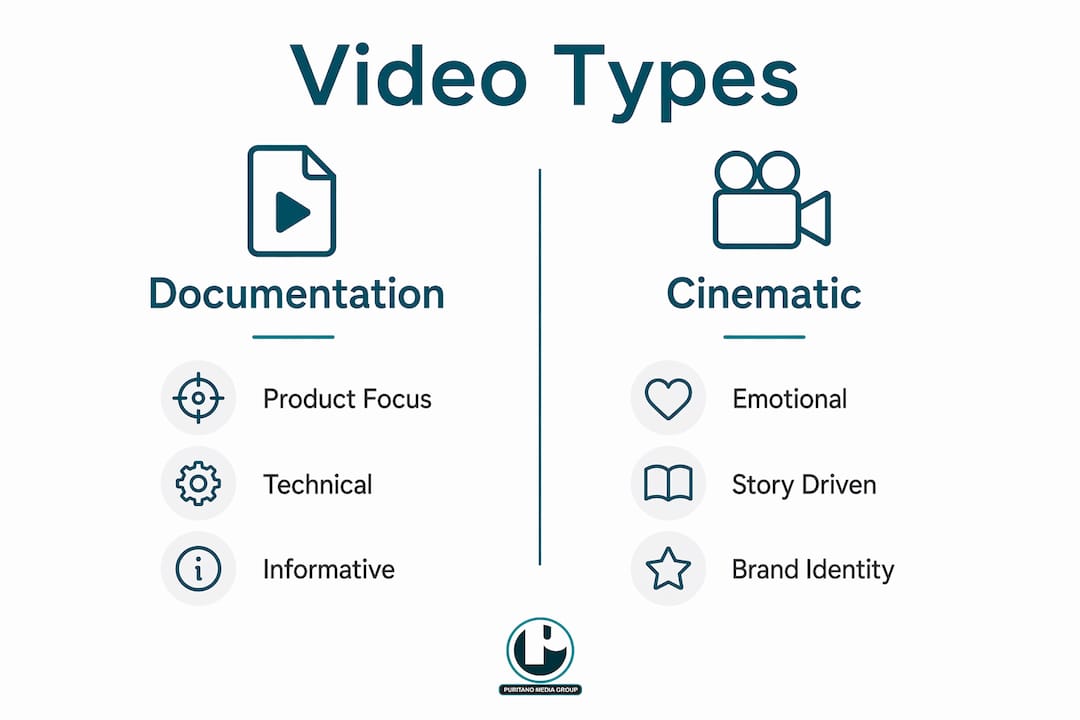
Most brands produce two types of video without realizing it. The first is documentation. The second is persuasion. Only one of them builds lasting brand equity.
Characteristic | Product Documentation Video | Cinematic Brand Video |
Primary goal | Show features and specifications | Create emotional connection |
Camera approach | Static, functional angles | Deliberate composition and movement |
Lighting | Flat, even, utilitarian | Mood-driven, brand-aligned |
Narrative structure | Linear feature walkthrough | Story arc with emotional payoff |
Viewer response | Informed | Moved |
Conversion mechanism | Rational decision | Emotional identification |
Product documentation videos have their place in a content strategy, particularly for technical buyers late in the purchase cycle. But cinematic video works best for brand perception because it respects viewers and tells film-like stories rather than advertisements. Audiences are trained to skip ads. They are not trained to skip stories.
The distinction comes down to intent. A documentation video shows a product being used. A cinematic brand video makes the viewer feel what it would be like to own that product, work with that company, or share that brand’s values. Narrative focus and deliberate frame composition are what separate the two approaches. When you treat brand storytelling as the foundation of your video strategy, cinematography becomes the architecture that holds the story together.
Pro Tip: Watch your last brand video with the sound off. If the story still makes emotional sense, your cinematography is doing its job. If it looks like a slide deck with motion, you have a documentation problem.
What cinematography techniques actually improve brand videos?
Knowing the theory is one thing. Knowing which techniques to prioritize on a real production is another. Here are the approaches that consistently produce stronger brand video performance.
1. Lens choice and depth of field. A wide-angle lens at close range distorts and dramatizes. A longer focal length compresses space and isolates subjects with a shallow depth of field. Selective focus directs the viewer’s eye precisely where you want it, which is critical when your brand message depends on a specific detail or emotion registering clearly.
2. Rule of thirds and mise-en-scène. Placing your subject at the intersection points of a three-by-three grid creates visual tension and balance that feels natural to the eye. Mise-en-scène, the French film term for “everything within the frame,” means every prop, color, and background element in your shot is a deliberate brand signal. Nothing should be accidental.
3. Camera movement matched to brand tone. Tracking shots that follow a subject create momentum and forward energy, useful for brands communicating growth or progress. Static, locked-off shots communicate stability and confidence. Handheld movement, used carefully, adds a documentary texture that modern audiences associate with authenticity and transparency.
4. Lighting setups aligned with brand identity. Three-point lighting with a warm key light works well for approachable, consumer-facing brands. High-contrast, single-source lighting creates drama and premium positioning. Natural light setups signal honesty and accessibility. The lighting choice is not aesthetic preference. It is brand communication.
5. Documentary texture for trust. Werner Herzog’s filmmaking approach, adapted for branded content, uses tactile ambient details to bypass rational skepticism and make brand videos feel authentic. Showing the grain of a material, the steam from a cup, or the texture of a workspace tells viewers this is real, not staged. That perception of authenticity directly affects trust.
The most important principle across all of these techniques is that effective cinematography is not about expensive equipment but about intentional, consistent visual messaging aligned with brand story. A $50,000 camera pointed at the wrong subject with flat lighting produces weaker results than a thoughtful cinematographer with a clear creative brief and a mid-range kit.
How does cinematography impact brand video performance and conversion?
Strong cinematographic choices produce measurable results, not just aesthetic ones. Here is what the evidence shows and what it means for your video investment decisions.
Cinematic quality directly increases time-on-screen. Viewers stay longer when the visual experience is engaging, and longer watch time signals platform algorithms to distribute content more broadly.
Pacing, color, and framing influence subconscious quality judgments. A viewer who perceives a video as high quality transfers that perception to the brand itself. This is why cinematic style links to premium brand positioning and stronger audience emotion.
Documentary texture and authentic visual storytelling reduce the skepticism that blocks conversion. When a viewer trusts what they see, they are more likely to act on it.
Cinematography without storytelling results in empty visuals that detract from audience experience. Beautiful shots that serve no narrative purpose do not convert. They distract.
“Powerful brand videos treat cinematography as an emotional architecture, manipulating the gaze to invite viewer participation.” — Film and Philosophy
For marketing professionals tracking ROI on video content, the metrics to watch are average view duration, completion rate, and click-through rate from video to landing page. Brands that invest in branded video campaigns with deliberate cinematographic choices consistently outperform those treating video as a checkbox deliverable. Cinematography is a production investment that pays back in brand equity, audience trust, and conversion lift over time.
Key takeaways
Cinematography is the single most powerful tool for communicating brand identity and emotional resonance in video, and every visual choice from lighting to lens selection either builds or undermines that goal.
Why most brand videos fail before the story even starts
Here is what I have seen after two decades of producing video content for brands across industries. The most common mistake is not a bad script or a weak concept. It is treating the camera as a recording device instead of a storytelling instrument.
Marketers often brief a video production team on what to show, not on how the viewer should feel. That single distinction is where most brand videos lose their potential. When the emotional architecture is missing from the brief, the cinematographer defaults to safe, functional choices. The result is a video that documents rather than persuades.
The brands that get this right treat their cinematographer as a strategic collaborator, not a technical vendor. They share brand positioning documents, audience personas, and emotional goals alongside shot lists. When a cinematographer understands that a brand needs to feel approachable but authoritative, they make different lighting and lens choices than if they were simply told to “make it look good.”
Cinematography should feel invisible to viewers, guiding attention without distracting from the story. That invisibility is the goal. When your audience finishes a brand video and says “that felt right” without knowing why, your cinematography worked. When they notice the camera work, something pulled them out of the story.
My advice to marketing professionals is this: stop evaluating brand videos by whether they look polished. Start evaluating them by whether they make you feel something specific within the first ten seconds. That feeling is the product of deliberate cinematic choices, and it is the most honest measure of whether your video investment is working.
Bring your brand story to life with Puritano
If you are ready to move beyond documentation and into genuine cinematic storytelling, Puritano has spent over two decades doing exactly that for brands across the Washington D.C. area and nationally. From corporate video production built around emotional narrative to music video work that demonstrates what deliberate cinematography looks like in practice, Puritano brings the same creative discipline to every project. You can explore the music video portfolio to see how visual storytelling translates across formats. If your brand video strategy needs a production partner who treats cinematography as a strategic tool, not a technical task, reach out and let us talk through what your next project needs.
FAQ
What is the role of cinematography in brand videos?
Cinematography controls how a brand video makes viewers feel through deliberate choices in lighting, camera angles, movement, and composition. These visual decisions communicate brand identity and build emotional connection before a single word of dialogue is spoken.
Why does cinematography matter more than script in brand videos?
The human brain processes visual imagery approximately 60,000 times faster than text, meaning cinematic choices create emotional impressions before the script registers. A strong script delivered through flat, uninspired cinematography will underperform a simpler message delivered with deliberate visual storytelling.
What cinematography techniques work best for brand videos?
Selective focus using depth of field, rule-of-thirds composition, camera movement matched to brand tone, and lighting setups aligned with brand identity are the most effective techniques. Documentary texture, such as tactile ambient details, also builds viewer trust and authenticity.
How does cinematography affect brand video conversion rates?
Cinematic quality increases average view duration and completion rates, which directly influence platform distribution and audience reach. Brands that use pacing and color temperature strategically in the opening seconds of a video shape subconscious quality judgments that carry through to purchase decisions.
Does good cinematography require expensive equipment?
No. Effective cinematography depends on intentional visual messaging aligned with brand story, not on camera cost. A clear creative brief and a skilled cinematographer with a mid-range kit will consistently outperform expensive equipment used without strategic intent.
Recommended
Cinematography is a set of choices, and the cheapest tool in the room is sometimes the right one. On a Thievery Corporation music video shoot, Charlie Puritano filmed through a vintage glass block ashtray to get a distorted look the song needed, rather than renting a specialty lens or faking it in post. That video went on to be seen by millions on YouTube and MTV. The lesson travels well to brand work: decide the feeling first, then pick the simplest honest way to make the camera produce it. It is the same instinct that has him shooting on vintage cinema lenses whenever a project allows, for the character modern glass is designed to engineer out.


Comments