

The Role of Video in Event Marketing: 2026 Guide

Video is the single most effective tool event marketers have for driving registrations, building anticipation, and extending event value long after the doors close. The role of video in event marketing has expanded well beyond the post-event highlight reel. Today it functions as a full-cycle strategy that touches every stage of the attendee journey. Video content drives 3x to 5x higher registration rates compared to static social posts. That number alone should reshape how you allocate your production budget. This guide breaks down exactly how to use video before, during, and after your event to maximize every dollar you spend.
How does video drive event registrations and early engagement?
Pre-event video is the strongest lever you have for filling seats. When potential attendees watch a speaker introduction, a behind-the-scenes teaser, or a 60-second social clip, they form an emotional connection with the event before they ever register. That connection converts.
The most effective pre-event video formats include:
Speaker introduction videos: A 90-second clip of a keynote speaker explaining what they will cover generates far more curiosity than a bio paragraph.
Event teaser reels: Short, high-energy clips showing venue highlights, past event energy, and attendee reactions create social proof.
Countdown social clips: Weekly short-form videos counting down to the event date keep your audience warm and your brand top of mind.
Behind-the-scenes previews: Footage of setup, rehearsals, or sponsor activations makes the event feel real and worth attending.
Video also strengthens your search presence. Integrating video with search marketing can increase branded search volume by up to 20%. That means more people actively searching for your event by name, which signals strong purchase intent to platforms like Google. The combination of YouTube SEO, social video distribution, and paid video ads creates a compounding effect that static graphics simply cannot replicate.
Pro Tip: Plan your pre-event video content at the same time you book your venue. A well-planned video strategy aligned with your event schedule ensures assets are ready when your audience is most engaged, not scrambling two weeks before the date.
The brands that consistently sell out events treat video as a pre-event engagement tool, not an afterthought. Start producing content six to eight weeks out, and you will see the registration curve respond.
What are the best practices for live and virtual event video?
The moment your event goes live, your video strategy shifts from promotion to capture. The goal is to produce shareable moments in real time, not just archive footage for later.
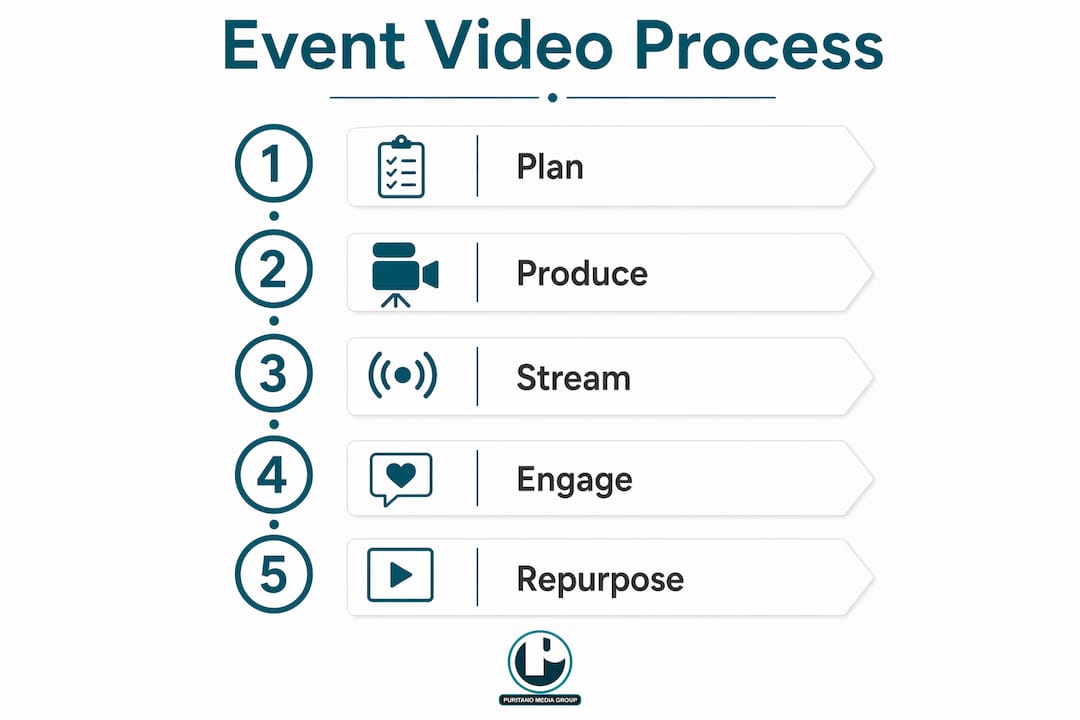
Virtual events demand faster production than traditional post-event highlight reels. Audiences expect clips from a morning session to appear on social media by afternoon. That workflow requires a dedicated video team on-site or monitoring the stream, not a single videographer hoping to edit everything next week.
Here is what effective during-event video looks like in practice:
Live streaming to LinkedIn, YouTube, or Instagram extends your reach to audiences who could not attend in person.
Real-time social clips of powerful quotes, audience reactions, or unexpected moments generate organic shares while the event is still happening.
Brand-consistent lower thirds and graphics make every clip instantly recognizable as yours, even when shared out of context.
Audience participation capture such as Q&A moments, networking highlights, and sponsor activations adds texture that a single-camera setup misses.
Video storytelling in marketing works because it triggers emotional responses that text cannot. A speaker’s pause before delivering a key insight, the crowd’s reaction to a product reveal, or a candid conversation in the hallway all communicate authenticity. That authenticity is what makes people share.
AI video tools have dramatically changed the economics here. Production costs that once ran into the thousands can now be handled for a fraction of that, and clips can be published in near-real time. That speed matters because the window for peak engagement during a live event is narrow.
Pro Tip: Assign one team member specifically to monitor social media during the event and flag moments worth clipping. The best shareable content is often spontaneous, and you will miss it if no one is watching for it.
How can event organizers repurpose video content post-event?
Post-event video is where most organizers leave money on the table. Uploading a single full-session recording to YouTube is not a strategy. It is a missed opportunity.
Repurposing a 90-minute session into 8 or more distinct video assets dramatically expands your reach compared to a single upload. Each asset serves a different platform, audience segment, and stage of the buyer journey. Here is how that breaks down in practice:
Full session recording for your on-demand content library or gated lead generation.
3–5 minute highlight clip for LinkedIn and your event recap page.
60-second social cut optimized for Instagram Reels, TikTok, or YouTube Shorts.
Speaker quote graphics with short video overlays for Twitter and LinkedIn posts.
Email nurture video sent to registrants who did not attend, showing what they missed.
Sponsor recap video delivered to sponsors as proof of value and a preview of next year.
Blog embed clips that support written content and improve on-page time.
Paid retargeting ads targeting people who visited your event page but did not register.
Post-event video content drives FOMO in non-attendees, reinforcing brand value and encouraging future event registration. That FOMO effect is most powerful in the first two weeks after the event, so your repurposing workflow needs to be fast. Build your editing queue before the event ends, not after.
Pro Tip: Learn how to repurpose corporate video across platforms before your next event. The same source footage can serve a dozen different formats with the right editing plan in place.
What is video’s impact on sponsorship and stakeholder engagement?
Sponsors are no longer satisfied with a logo on a banner and a mention in the program. They want ongoing visibility, measurable engagement, and proof that their investment reached the right people. Video delivers all three.
Video-first strategies integrate sponsors as part of the communication strategy, creating authentic visibility and ongoing connections with event audiences. That is a fundamentally different conversation than selling a sponsorship package. You are selling a content partnership.
Here is what that looks like in practice:
Sponsored content segments woven into pre-event video series give sponsors visibility before the event even starts.
Branded live stream segments during the event put sponsor messaging in front of your largest real-time audience.
Post-event sponsor recap videos give sponsors shareable content they can distribute to their own audiences, multiplying your reach.
Year-round video touchpoints keep sponsors visible between events, which is where most organizers lose the relationship.
“Organizations that view video as a year-round engine unlock higher ROI, improved sponsorship engagement, and stakeholder connections beyond event days.” — IAEE, 2026
The role of video in integrated marketing is especially clear here. When your event video feeds your social channels, your email campaigns, your paid ads, and your sponsor deliverables simultaneously, every piece of content works harder. That compounding effect is what separates organizations that grow their events year over year from those that plateau.
Video storytelling also creates community advocacy. Attendees who see themselves in event footage share it. Speakers who receive polished clips of their sessions post them. Sponsors who get strong branded content distribute it. Each of those shares extends your event’s reach without additional ad spend. For trade associations and membership organizations, this community-driven distribution is often the most cost-effective marketing channel available.
Key takeaways
Video is the highest-ROI investment in event marketing because it drives registrations, extends event shelf life, and creates sponsor value that static content cannot match.
What i’ve learned after two decades of event video production
Here is the honest truth about event video that most marketing articles skip: the biggest mistake organizers make is not underinvesting in production. It is underinvesting in planning.
We have worked with organizations that spent significant budgets on beautiful event footage and then uploaded one video to YouTube and called it done. The production quality was excellent. The strategy was nonexistent. The ROI was predictably disappointing.
The shift I have seen in the last few years is real. The organizations getting the most out of their event video are treating it the way they treat their editorial calendar. They plan content formats before the event, assign roles during the event, and build a distribution schedule for the weeks after. That discipline is what separates a video that gets 200 views from one that generates leads for six months.
I am also genuinely excited about what AI video tools are doing for speed. The ability to publish a polished clip within hours of a session ending is a real competitive advantage. But AI does not replace the judgment required to identify which moments are worth capturing and how to frame them for your specific audience. That still requires human expertise.
My practical advice: build your post-event repurposing plan before you shoot a single frame. Know what formats you need, which channels they will go to, and who is responsible for editing. The footage is only as valuable as the plan behind it.
See what professional event video can do for your next campaign
Puritano Media Group has spent over two decades producing video content that works across every stage of the event marketing cycle, from pre-event teasers to post-event content libraries. If you are planning a corporate event, association conference, or virtual summit, our team can help you build a video strategy that drives registrations and delivers real sponsor value. Explore our capabilities and case studies to see how we approach event video from strategy through distribution. You can also browse our full video production services to find the right fit for your next project.
FAQ
How does video increase event registrations?
Video drives 3x to 5x higher registration rates compared to static social posts by creating emotional connection and social proof before the event. Speaker teasers, highlight reels, and countdown clips are the most effective formats.
What types of video work best during a live event?
Live streams, real-time social clips, and branded quote videos published during the event capture peak audience engagement. Virtual events especially require fast production workflows to maximize sharing while the event is still happening.
How many assets can you create from one event session?
A single 90-minute session can generate 8 or more distinct video assets, including full recordings, short social cuts, speaker clips, sponsor recaps, and paid retargeting ads.
How does video improve sponsor ROI at events?
Video integrates sponsors into the content strategy through branded segments, live stream placements, and post-event recap videos, giving them ongoing visibility rather than a single-day logo impression.
What is the role of video in post-event promotion?
Post-event video extends the event’s shelf life by driving FOMO in non-attendees, feeding on-demand content libraries, and supporting email nurture campaigns that convert future registrants for months after the event ends.
Recommended
Comments