

The Role of Video in Brand Repositioning: 2026 Guide
- Charlie Puritano
- Jul 7
- 7 min read

Video is the most direct tool available for brand repositioning, defined as the deliberate process of shifting how a target audience perceives your brand’s identity, values, and market position. A single exposure to a brand’s video advertisement can increase sales by 1%–5% over three years. That kind of compounding return from one touchpoint is something no static campaign can match. Video combines motion, sound, and narrative into a format that reshapes perception faster and more durably than any other medium. For marketing professionals managing a repositioning effort, understanding how video drives that shift is not optional. It is the foundation of a credible strategy.
How video content shapes brand image during repositioning
The role of video in brand repositioning goes beyond aesthetics. Video works because it activates both visual and auditory processing simultaneously, which creates stronger emotional memory than text or static images alone. That emotional imprint is what makes a repositioned brand feel real to an audience rather than just announced.
Storytelling is the mechanism that makes this work. When a brand film shows real employees, real customers, or a genuine behind-the-scenes process, it communicates new values without stating them outright. The audience draws its own conclusions, and those conclusions stick. Testimonial videos operate the same way. A customer describing a transformation in their own words carries more credibility than any tagline. Brand storytelling best practices consistently show that narrative-driven formats outperform product-focused formats in building long-term brand affinity.
The most effective video types for repositioning include:
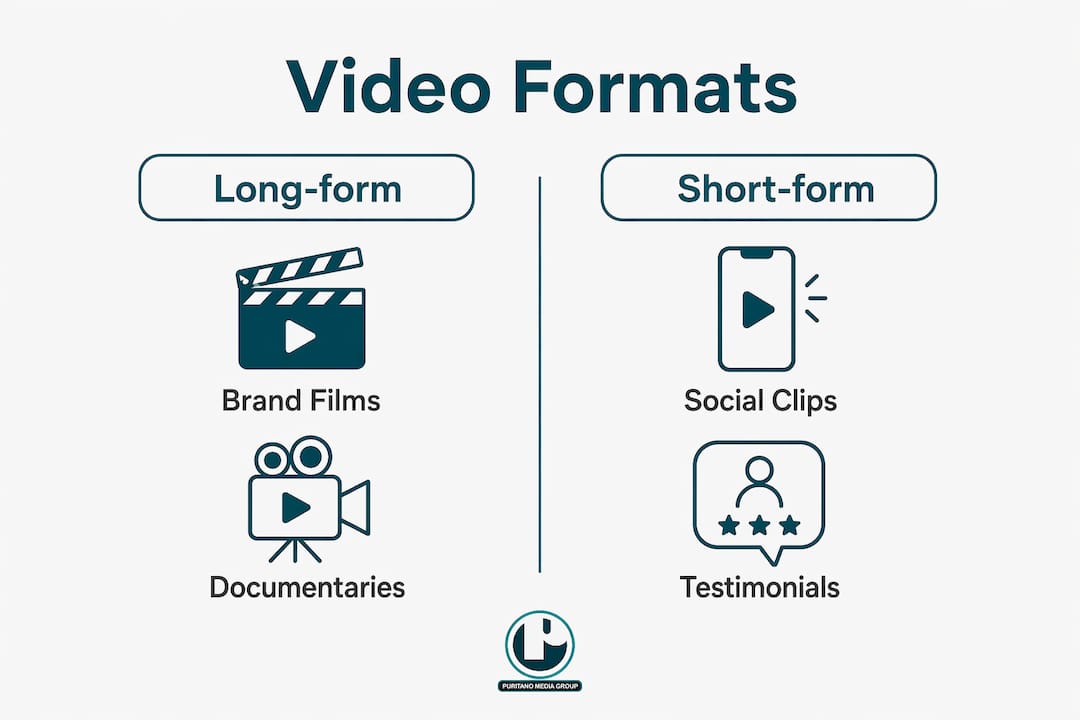
Brand films: Long-form narratives (90 seconds to 5 minutes) that reframe the brand’s origin, mission, or values for a new audience segment.
Customer testimonials: Short, authentic accounts that validate the repositioned identity through real experience.
Documentary-style content: Behind-the-scenes or process-driven videos that build transparency and trust.
Explainer videos: Concise formats that clarify what the brand now stands for and who it serves.
Each format serves a different stage of the repositioning arc. Brand films anchor the new identity. Testimonials confirm it. Explainers make it accessible.
Pro Tip: When producing a brand film for repositioning, write the emotional conclusion first. Decide how you want the audience to feel at the end, then build the narrative backward from that feeling. This prevents the common mistake of leading with features instead of values.
Which video formats work best for brand repositioning in 2026?
The format landscape has shifted significantly. Marketers are moving video budgets away from polished hero commercials toward creator-led and user-generated content, with that share expected to grow from 6% to 18% of total video spend by 2028. This is not a trend to wait on. It reflects a fundamental change in how audiences, especially Gen Z, evaluate brand authenticity.
Short-form social video is now the dominant format by budget allocation. Short-form video spend is projected to rise from 28% in 2026 to 40% of brand video spend by 2028. Platform algorithms on TikTok and Instagram actively reward short, native-feeling content over produced commercials. LinkedIn favors thought leadership clips and behind-the-scenes content that feel personal rather than broadcast.
Social video platforms like LinkedIn, Instagram, and TikTok each serve distinct audience behaviors. LinkedIn reaches decision-makers. Instagram builds visual brand equity. TikTok accelerates reach with younger demographics. A repositioning campaign that treats all three as interchangeable will underperform on all three.
Pro Tip: Avoid embedding repositioning videos through standard YouTube players on your own landing pages. YouTube’s recommended video sidebar pulls viewers away from your brand narrative and onto competitor content. Use a performance-optimized hosting environment that keeps the viewer focused on your message.
How do you measure video impact on brand repositioning?
Measurement is where most repositioning campaigns lose discipline. The metrics that matter depend on where the video sits in the customer journey, and mixing them up produces misleading data.
Here is a practical framework organized by repositioning goal:
Brand awareness: Track reach, unique views, and branded search volume lift in the weeks following a campaign launch. These numbers tell you whether the repositioned identity is reaching new audiences.
Engagement: Monitor watch-through rate, shares, and comments. Video content generates 12 times more social shares than static posts. A share is a signal that the audience found the content worth associating with publicly.
Conversion: Measure landing page conversion rate before and after embedding video. Explainer videos on product pages increase purchase intent by 73%. That lift is the clearest signal that the repositioned message is landing.
Loyalty: Track return visitor rate, email open rates from video-driven segments, and customer lifetime value over a 6–12 month window post-campaign.
Integrating these metrics into your broader marketing measurement framework requires tagging video traffic separately in your analytics platform. Without that segmentation, video’s contribution disappears into general traffic data and you lose the ability to prove ROI.
Practical steps for incorporating video into your repositioning strategy
A repositioning campaign fails when video is treated as a deliverable rather than a strategy. The production brief should come after the strategic brief, not before it. Aligning video type with the specific customer journey stage is the single most common gap between campaigns that work and campaigns that waste budget.
Here is how to build a video-first repositioning plan that holds together:
Map your repositioning arc first. Define the old perception, the new perception, and the gap between them. Every video format you choose should close part of that gap for a specific audience segment.
Audit your current video assets. Identify which existing content reinforces the old brand identity and needs to be retired or reframed. Leaving contradictory content live undermines the repositioning signal.
Build a blended production team. A team combining in-house talent, AI production tools, and creator partnerships is more agile and cost-effective than a traditional agency-only model for continuous repositioning campaigns. Brands that rebuild production structure and strategy simultaneously outperform those that change formats without changing workflows.
Reallocate budget toward formats with longevity. Brand films and documentary content have longer shelf lives than trend-driven short-form content. Short-form drives reach. Long-form drives retention. You need both, but the ratio depends on your repositioning timeline.
Distribute across channels with intent. Each platform requires a native version of the content. A brand film cut for LinkedIn should feel different from the same story cut for Instagram. Boosting social media presence with video requires platform-specific optimization, not just cross-posting.
Repurpose systematically. A single brand film shoot can yield a hero video, three to five short-form clips, a testimonial cut, and a behind-the-scenes piece. Plan the repurposing strategy before the shoot, not after.
Pro Tip: Budget planning for video works best when you separate production costs from distribution costs in your line items. Most teams underinvest in distribution and then blame the creative when the campaign underperforms.
The research on visual storytelling confirms that brands achieving the strongest repositioning results treat video as an ongoing content system, not a one-time campaign. That means building production capacity that can respond to audience feedback in near real time, not waiting for a quarterly creative cycle.
Key Takeaways
Video is the most measurable and emotionally durable tool for brand repositioning, with documented sales impact compounding over multiple years from a single exposure.
What I’ve learned about video and brand repositioning after two decades
The most common mistake I see marketing teams make is treating repositioning as a single campaign moment. They produce a brand film, launch it, and wait. When the metrics plateau after 90 days, they conclude that video “didn’t work.” What actually didn’t work was the strategy around the video.
Repositioning is a sustained signal, not a single broadcast. The brands that shift perception durably are the ones that show up consistently with video content that reinforces the new identity across every touchpoint. Storytelling through video is not a one-time declaration. It is a repeated pattern that gradually replaces the old mental model with a new one.
The shift toward creator-led content has also changed what “quality” means in this space. Audiences now read high production polish as a signal of distance from authenticity. A founder talking directly to camera in a well-lit office often outperforms a $50,000 brand film in engagement and trust metrics. That does not mean production quality is irrelevant. It means the wrong kind of polish, applied to the wrong format, signals inauthenticity. Knowing the difference is the real craft.
The tension between short-term performance goals and long-term brand building is real, and video is one of the few tools that can serve both simultaneously. Short-form content feeds the algorithm and drives immediate reach. Brand films build the emotional foundation that makes conversion easier six months later. The marketers who figure out how to run both tracks at once are the ones winning repositioning campaigns right now.
How Puritano supports brand repositioning through video
Puritano Media Group has spent over two decades helping brands reshape how audiences see them through video. Whether the goal is a full brand identity overhaul or a targeted campaign to reach a new market segment, Puritano brings production depth and strategic thinking to every project. The team’s work spans music video production and virtual event coverage to corporate brand films and social content series. If you are planning a repositioning campaign and need a production partner who understands both the creative and the measurement side, Puritano is worth a conversation. Reach out through the website to discuss your goals and get a realistic scope for what video can do for your brand.
FAQ
What is the role of video in brand repositioning?
Video repositions a brand by communicating new values and identity through emotionally resonant storytelling that reshapes audience perception faster than text or static content. A single video exposure can increase sales by 1%–5% over three years.
Which video format is most effective for repositioning?
Brand films are the strongest format for anchoring a new identity, while short-form social videos drive reach and awareness. The most effective campaigns use both formats with platform-specific versions of each.
How does video influence brand image with audiences?
Video combines visual and auditory stimuli to create stronger emotional memory than other media. 85% of people report being convinced to buy a product or service after watching a brand’s video.
What metrics should I track for a video repositioning campaign?
Track reach and branded search lift for awareness, watch-through rate and shares for engagement, and landing page conversion lift for purchase intent. Measure sales impact over a 6–12 month window to capture video’s long-term contribution.
How much of a video budget should go to short-form content?
Short-form video spend is projected to reach 40% of brand video budgets by 2028. The right allocation depends on your repositioning timeline, but most brands benefit from dedicating at least 30% to short-form formats for platform reach.
Recommended


Comments