

5 Step Talent Release Checklist and Templates for Video Producers

A talent release for video is a signed contract giving a producer permission to record, edit, and distribute someone’s name, image, voice, or performance. You need one anytime the footage will be used commercially or the person is identifiable on camera, no exceptions worth risking. Get it signed before anyone rolls camera, not after the edit is locked.
What a Talent Release Covers: The Bundle of Rights
A talent release is not one right. It is a bundle, and each piece needs its own line of language.
The core grants typically include image, name, voice, and performance, plus the right to edit the footage and distribute it across whatever media the project requires. That last part matters more than most first-time producers realize: a release that only mentions “video” says nothing about whether you can cut a fifteen-second clip for Instagram or repurpose the interview in a future campaign.
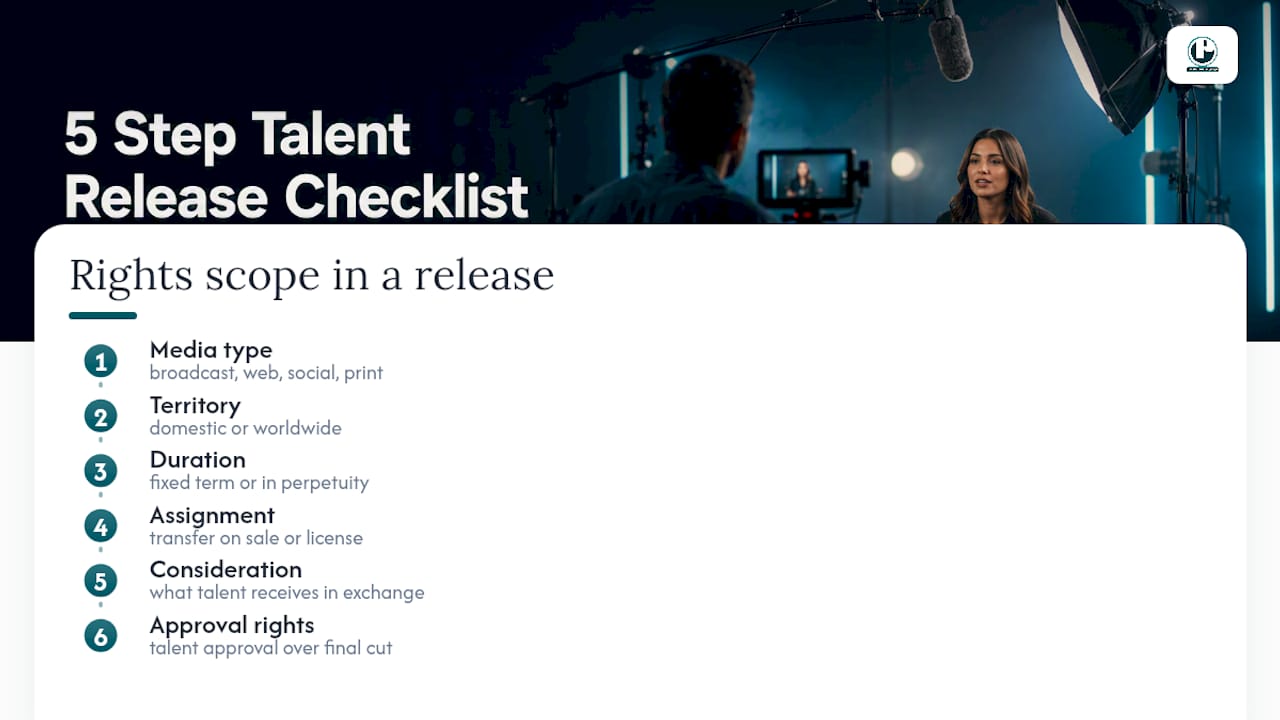
Four scope variables decide how far those rights actually extend: media type (broadcast, web, social, print), territory (domestic or worldwide), duration (a fixed term or in perpetuity), and assignment (whether the rights transfer if the agency sells the footage or licenses it to a client). Consideration, meaning what the talent receives in exchange, and any approval rights over the final cut also belong in the document. Loose wording here is where clean productions turn into legal headaches later.
Do You Need a Release for Commercial or Editorial Video?
The rule is simple: commercial use requires a release, editorial use often does not. A talent release form exists precisely because commercial use puts someone’s likeness to work selling a product, service, or brand, and that carries legal weight editorial content doesn’t.
Ads, client testimonials, corporate marketing reels, and paid social campaigns all need signed releases, full stop. Documentary interviews and pure news coverage frequently qualify as editorial and may not, depending on your state’s right-of-publicity rules.
The trap most producers fall into is reuse. Footage shot for an editorial piece gets pulled six months later into a paid ad campaign, and suddenly there’s no release covering that use. Distributors and errors-and-omissions insurers catch this fast, and a missing release can block licensing entirely or trigger legal demands well after the shoot wrapped.
Key Clauses Every Talent Release Should Have
Every solid release, regardless of the project’s size, includes the same core clauses. Skip one and you’ve left a door open for a dispute.
Project and parties: name the production’s actual legal entity, not just a working title or the client’s brand name.
Grant of rights: spell out media types, territory, and duration rather than defaulting to vague “all rights” language.
Assignment language: state whether rights transfer if the footage gets licensed or sold to a third party.
Consideration and irrevocability: document what talent receives and confirm the grant can’t be pulled back later.
Editing, credit, and approval: clarify whether talent gets any say over the final cut or on-screen credit.
Indemnity and governing law: protect the production from claims and set which state’s law applies.
Signature and date: the release isn’t valid until it’s signed, dated, and stored.
Well-drafted releases specify project scope, grant of rights, and assignment terms precisely because vague contracts are the ones that get challenged.
Pro Tip: If you plan to create a digital replica or materially alter someone’s likeness with AI, add a specific clause describing exactly how. Generic “any media now known or later developed” language often fails to cover replica use in states with stricter right-of-publicity rules.
Minors on Set: What Extra Consent Do You Need?
A parent or legal guardian must sign the release for any minor appearing on camera. Skip that step, and the release can be voided entirely, leaving the production exposed no matter how solid the rest of the paperwork looks.
Some states go further, requiring an entertainment work permit or court approval before a minor can legally perform on a commercial shoot. California and New York enforce this closely; other states are looser but still worth checking before you book a young performer.
Keep three things on file alongside the signed release: ID verification for the guardian, documentation proving legal authority over the minor, and a copy of any permit or court order. Missing paperwork here is one of the fastest ways to stall a project during distribution review.
How to Collect and Store Releases Without Losing the Paper Trail
Signed releases only protect a production if they’re collected on time and stored where anyone reviewing the project later can actually find them. Here’s the workflow that holds up under distributor and insurer scrutiny:
Collect the signed release before the person steps in front of the camera, every time, no exceptions.
Attach each release to the day’s call sheet and the master shot log so it’s tied to a specific date and scene.
Use an e-sign platform rather than a scanned signature. E-signatures are valid under the ESIGN Act as long as the audit trail, including timestamp, IP address, and signature token, is preserved alongside the signed file.
Back up the signed PDF, the audit log, and ID verification in at least two secure storage locations.
Log signer name, role, project title, and version number as metadata attached to each file for chain-of-title purposes down the line.
Distributors and errors-and-omissions insurers rarely reject a project over a missing clause. They reject it far more often over a broken process: releases that were never collected, or audit trails that vanished somewhere in post.
Choosing and Adapting a Talent Release Template
Not every shoot needs the same document. Templates come in a few standard flavors, and picking the wrong one is a common rookie mistake.
Standard performer release: full grant of rights, appropriate for lead talent, hosts, or on-camera interviewees.
Background/extra release: shorter form, often used for crowd shots or non-speaking background talent.
Voice-only release: covers voiceover work where no image is used at all.
Minor release: built around guardian signature and permit documentation.
Whichever template you start with, edit the territory, duration, and reuse clauses to match the actual project scope, and add digital-replica language if AI tools might touch the footage later. Bring in legal counsel when union talent is involved, when a major distributor requires specific language, or when the project involves international assignment of rights.
Common Mistakes That Void or Weaken a Release
Most release problems trace back to the same handful of avoidable habits.
Relying on verbal consent or a text message approval instead of a signed document. Verbal releases carry little weight with distributors and insurers.
Using vague “all rights, all media” language instead of defining scope, territory, and duration explicitly.
Losing the e-sign audit trail, or worse, never generating one in the first place.
Skipping guardian documentation for a minor because the shoot felt informal.
Naming the wrong entity, like a client’s brand instead of the actual production company, or leaving out assignment language entirely.
Pro Tip: Before wrapping any shoot, do a quick release audit against your shot list. It takes ten minutes on set and can save weeks of chasing signatures after everyone’s gone home.
A talent release also doesn’t replace actor agreements, union paperwork, or E&O clearance; it’s one piece of a larger chain-of-title puzzle, not the whole thing.
How Puritano Handles Rights Clearance on Every Shoot
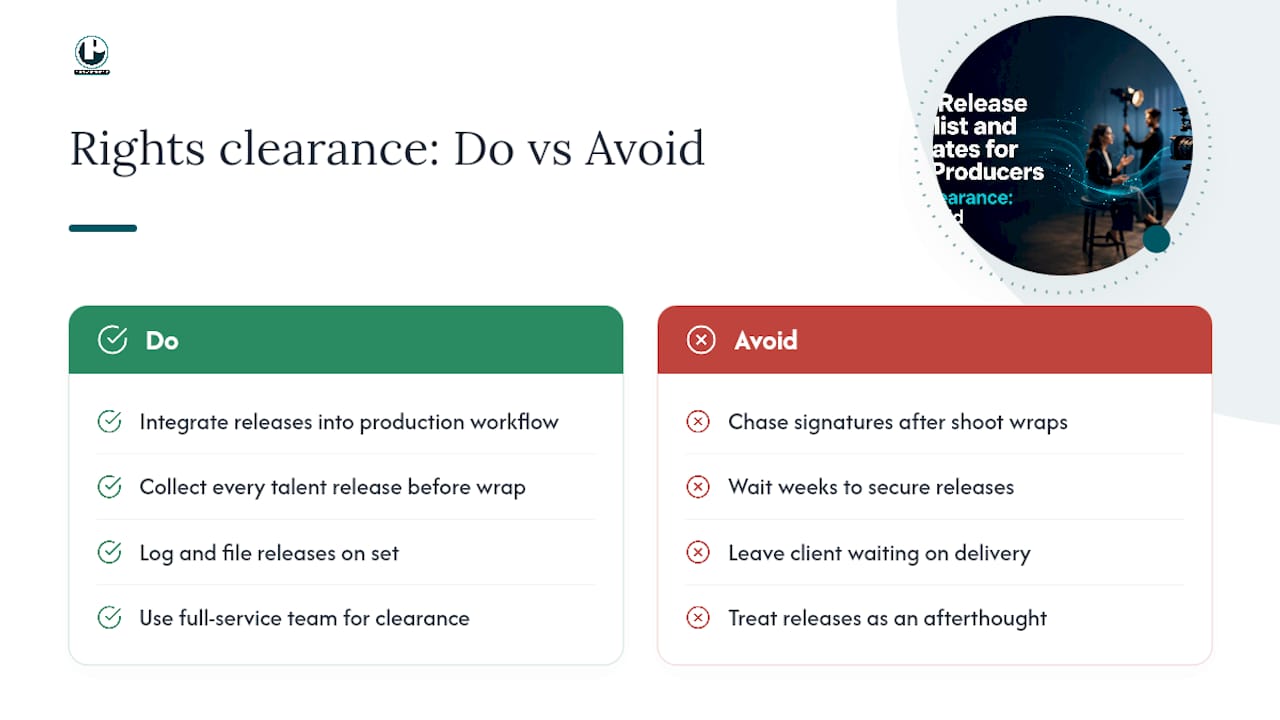
Chasing down signatures after a shoot wraps is the kind of problem that eats a production timeline alive; producers can find useful advice and resources on content creation to help manage releases efficiently. Release management and rights clearance should be integrated into the production workflow itself, so every talent release is collected, logged, and filed before the crew breaks down the lights, not weeks later when a client is waiting on delivery.
That’s part of what full-service production actually means at Puritano: corporate videos, branded content, live event coverage, and music video production all run through the same chain-of-title discipline, whether the talent is a company spokesperson or a featured performer. If your team is planning a shoot with on-camera talent and wants the paperwork handled by people who do this daily, reach out through Puritano’s contact page to talk through your project scope and timeline.
Sources
FAQ
What Is a Standard Talent Release Form?
A standard talent release form is a signed contract granting a producer permission to record, edit, and distribute a person’s name, image, voice, and performance. It typically specifies media type, territory, duration, consideration, and assignment rights so the grant holds up under distributor review.
What Is the Standard Release Form for Filming?
For filming, the standard form covers image, voice, and performance rights, plus editing and distribution permissions across specified media. Background talent and voice-only performers typically sign shorter, role-specific versions of the same core document.
What Is a Video Release Form?
A video release form, often called a talent release video or model release for video, is written consent letting a producer use someone’s likeness in recorded content. It becomes mandatory whenever the footage will be used commercially or the subject is clearly identifiable, per right-of-publicity guidance.
What Should a Release Form Include?
A complete release form should include project and party identification, a specific grant of rights covering media and territory, duration, consideration, assignment language, and a signature with a date. Missing any of these, especially scope and assignment terms, is a common reason releases get challenged later.
Does Puritano Handle Talent Releases for Video Shoots?
Yes. Puritano manages release collection and rights clearance as part of its full-service video production process, covering corporate, branded, and live event projects. Current project pricing is available directly through the video production company’s site.
Recommended


Comments