

How to Outsource Video Production for Better Results
- Charlie Puritano
- 1 minute ago
- 12 min read
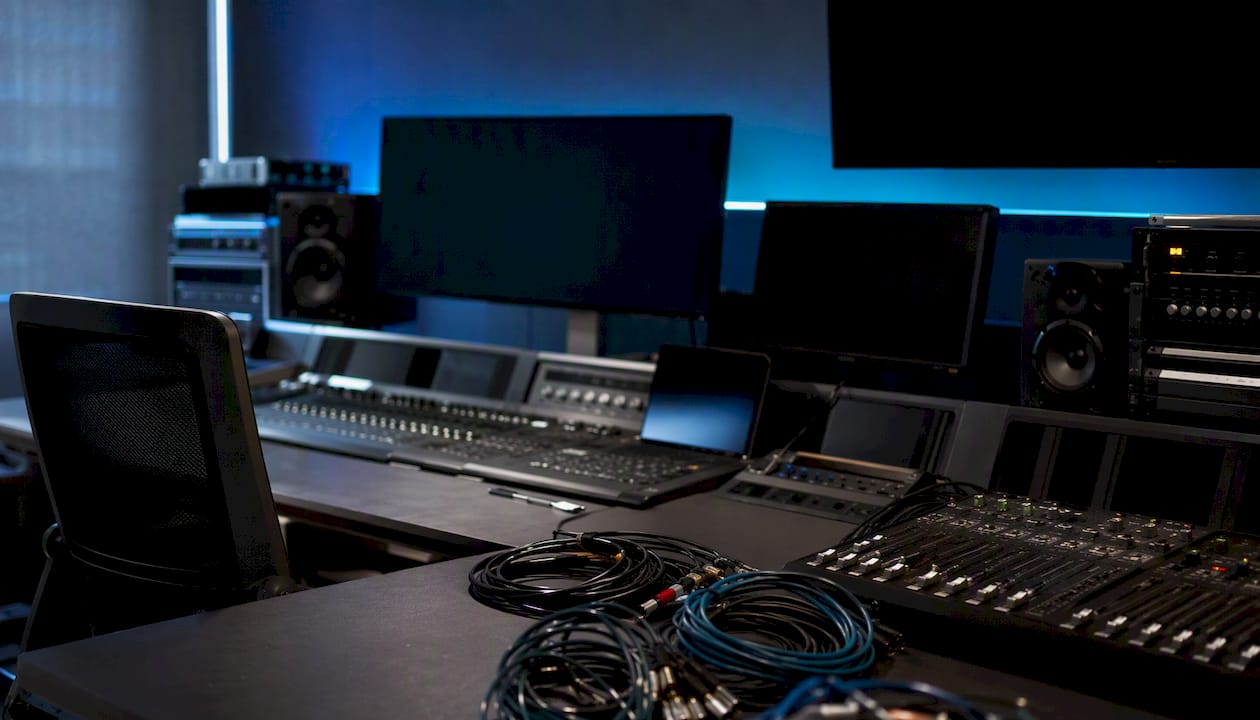
The fastest, least-risk route to outsource video production is to define your scope first (editing-only vs. full production), choose a pricing model that matches your cadence (project-based or retainer), and run a scoped pilot on a single deliverable with a one-page brief. HubSpot’s State of Marketing research confirms that video is a central pillar of modern marketing strategy, and Statista data on monthly YouTube users illustrates the platform scale that makes consistent video output a genuine competitive advantage. Puritano Media Group, with over two decades of full-service production experience, is one of the providers built to run exactly this kind of engagement.
Start here. In the next 24–72 hours:
Define scope. Decide whether you need editing-only, post-production, or full production from script to screen.
Set a budget band. Agree internally on a per-project or monthly ceiling before you talk to any provider.
Establish a timeline. Name a realistic delivery date for the pilot deliverable, including at least one revision round.
Prepare a sample deliverable. Pull a reference video that shows the tone, length, and format you want.
Note your NDA and rights requirements. Decide upfront who owns the final files and raw footage before signing anything.
Key Takeaways
Outsourcing video production works best when you define scope precisely, brief the provider thoroughly, and run a scoped pilot before committing to a retainer or large contract.
Point | Details |
Define scope first | Decide editing-only vs. full production before contacting any provider — it determines pricing, timeline, and contract terms. |
Brief quality drives results | A one-page brief with objective, format specs, deliverables, and reference videos cuts revision rounds and protects your budget. |
Pricing model shapes total cost | Project pricing suits one-off needs; retainers suit recurring volume; U.S. full-production projects commonly have a wide range of costs depending on crew size, shoot days, and post complexity. |
Single reviewer rule | Assign one internal decision-maker to consolidate feedback before it reaches the provider, reducing revision cycles significantly. |
Puritano as your production partner | Puritano Media Group offers full-service video production nationally, with proven work across corporate, nonprofit, event, and social formats. |
What does “outsourced video production” actually cover?
The phrase covers a wider range of services than most buyers expect. At the narrow end, you are hiring someone to cut and color footage you already shot. At the broad end, you are handing over a creative brief and receiving a finished, broadcast-ready asset. Here are the main service buckets:
Editing-only: Assembly cut, rough cut, and fine cut from your raw footage. Deliverables typically include a master file and social-format cuts (vertical, square, widescreen).
Post-production: Color grading, motion graphics, lower thirds, audio mix, and subtitle burn-in. Often bundled with editing or billed as add-ons.
Full production (script to screen): Creative concept, scripting, pre-production planning, shoot, edit, and delivery. The provider manages the entire pipeline.
Animation and explainers: 2D or 3D motion graphics, character animation, and whiteboard-style videos. Usually priced per finished minute.
Live event capture: Multi-camera shoot, live switching or post-edit, and highlight reels. Deliverables often include a full-length master plus short social clips.
Subscription or retainer models: A fixed monthly fee for a set volume of deliverables. Common for brands running recurring social content or training series.
Ownership and rights vary by bucket. For editing-only work, you typically retain all rights because you supplied the raw footage. For full-production engagements, the contract must explicitly state who owns the master files, the raw footage, and any music licenses. Localization, closed captions, and accessibility deliverables (SRT files, audio descriptions) are usually billed separately unless the brief specifies them upfront.
Why do businesses and creators outsource video production?
The business case comes down to four things: access to specialists, predictable capacity, faster time-to-publish, and cost structure. Vidyard’s analysis of in-house vs. outsourced production frames outsourcing as buying production capacity without adding headcount, which is the right mental model for most marketing teams.
The core benefits:
Specialist access. A good provider brings a colorist, motion designer, audio engineer, and director of photography under one roof. Hiring all of them in-house is rarely justified unless video is your primary product.
Scalability. You can go from two videos a month to ten without a hiring cycle. That flexibility matters most during product launches, event seasons, and campaign peaks.
Faster time-to-publish. Dedicated teams with established workflows typically turn around a social cut faster than an in-house generalist juggling other responsibilities.
Lower total cost for variable volume. For many organizations, a project or retainer fee beats the fully loaded cost of a full-time video editor once you factor in salary, benefits, equipment, and software.
The real tradeoffs:
Brand drift is the most common risk. An external team that does not deeply understand your voice can produce technically polished work that feels off-brand.
Turnaround dependencies are real. If your provider is managing multiple clients, your revision can sit in a queue.
IP and contract complexity increases. Every engagement needs a clear ownership clause, especially for footage that may be repurposed later.
Review overhead adds up. Without a single decision-maker on your side, feedback loops multiply and timelines slip.
The signals that outsourcing will drive positive ROI: you need more than four videos per month, you have a calendar peak (conference season, product launch, annual report), or you face a one-off skill gap like a broadcast commercial or a multi-camera live event. Why agencies invest in video content breaks down the volume argument in more detail.
When should you outsource vs. keep production in-house?
Run through this checklist before committing either way.
Cadence. If you need video fewer than twice a month, a project-based outsource arrangement is almost always more cost-effective than a full-time hire.
Complexity. Multi-camera shoots, heavy VFX, broadcast commercials, and live event coverage require specialist gear and crew that most in-house teams cannot replicate.
Budget predictability. Retainer and project pricing give finance teams a fixed number. In-house production costs fluctuate with overtime, equipment rentals, and software upgrades.
Brand governance. If your brand standards are highly specific, you need a provider with a documented onboarding process for brand assets, not a freelancer who works from memory.
In-house capability gaps. Motion graphics, color science, and professional audio mix are skills that take years to develop. Outsource the gaps rather than producing mediocre work internally.
Use cases where outsourcing is especially well-suited:
Social ad creative at scale (multiple cuts, A/B variants, platform-specific formats)
Recurring explainer or training video series
Live event and conference coverage
E-learning module production with accessibility requirements
For mixed approaches, the cleanest model is to keep creative strategy and brand oversight in-house while outsourcing execution. Your team writes the brief and approves the cut; the external provider handles everything in between.
How to outsource video projects step by step
Follow this sequence for a low-risk pilot that you can scale once it succeeds.
Scope and budget. Define the deliverable (format, length, platform), set a budget ceiling, and decide whether this is a one-off project or the start of a retainer.
Write a one-page brief. Include: objective, target audience, video length, reference videos, deliverables list, branding rules, asset inventory (logos, fonts, music), and deadline.
Shortlist and vet providers. Request a showreel, at least two case studies in your industry or format, and a sample deliverable file. Ask for references.
Run a scoped pilot. Commission one video or one short deliverable before committing to a larger contract. This tests the workflow, not just the portfolio.
Execute the contract. The contract must specify: deliverable list, file formats, who owns the final files and raw footage, revision rounds included, payment milestones tied to deliverables, and a basic NDA covering your brand assets and unreleased content.
Transfer assets and brief the team. Use a shared cloud folder with a clear naming convention. Confirm the provider has everything before work begins.
Review and approve. Consolidate all feedback in one round from one reviewer. Avoid sending conflicting notes from multiple stakeholders.
Receive final delivery and archive. Confirm you have the master file, all social cuts, project files, and any raw footage specified in the contract.
Evaluate and scale. After the pilot, assess turnaround accuracy, communication quality, and creative alignment before expanding the scope.
Your one-page brief should include these fields:
Objective (what business outcome does this video serve?)
Audience (who is watching, and on which platform?)
Length and format (e.g., 60-second vertical for Instagram Reels)
Reference videos (links to 2–3 examples that capture the tone)
Deliverables (master, social cuts, SRT file, project file)
Brand assets (logo files, color codes, approved music, fonts)
Legal and usage rights (where and how long will this video be used?)
Deadline and revision rounds included
Pro Tip: Assign a single internal reviewer and require all feedback to be time-coded (e.g., “at 0:32, the lower third font is wrong”). This one rule cuts revision cycles in half and eliminates the back-and-forth that kills timelines.
For a deeper look at briefing a video production team, Puritano’s guide walks through each field in detail.
How do you choose the right video production provider?

Choosing a provider is not just about who has the best reel. It is about finding a team whose process, communication style, and pricing model fit your workflow.
Core evaluation dimensions:
Portfolio fit. Does their showreel include work in your format (corporate, social, event, e-learning) and your industry? A stunning music video reel does not prove they can produce a compliance training module.
Pricing model alignment. Project pricing suits one-off needs; retainer pricing suits recurring volume. Make sure the model matches your cadence before you negotiate rates.
Turnaround track record. Ask for specific examples: “How long did your last corporate video take from brief to final delivery?” Vague answers are a yellow flag.
Creative input level. Some providers execute your script; others develop the concept from scratch. Know which you need before the call.
Project management style. Do they use a shared project management tool (Frame.io, Notion, Asana)? How do they handle scope changes? Who is your single point of contact?
Questions to ask on a vetting call:
Walk me through your process from brief to final delivery.
What is your standard turnaround for a project of this scope?
Can you share a sample deliverable file (not just a finished video)?
How many revision rounds are included, and what counts as a revision?
Who handles the project if your lead editor or director is unavailable?
Do you carry general liability insurance and errors-and-omissions coverage?
Red flags to watch for:
No project files or raw footage in the deliverables package
Opaque or “contact us for pricing” with no ballpark range offered
A showreel with wildly inconsistent quality across projects
No client references or case studies beyond a logo wall
Reluctance to sign an NDA before discussing your project
Trust signals to request before signing:
Showreel with at least three projects in your format
Two case studies with named client types and described outcomes
Client testimonials or third-party reviews (platforms like Trustpilot show review recency and volume as reliability signals)
A sample deliverable file (not just a rendered video, but an actual export package)
A written revision policy and turnaround commitment
For a structured framework on vetting a video production agency, Puritano’s guide covers the DMV market specifically but applies broadly.
What does outsourced video production cost in the U.S.?
Pricing varies more than most buyers expect, and the model you choose shapes the total cost as much as the rate itself.
Common pricing models:
Per-project: A fixed fee for a defined deliverable. Best for one-off needs with a clear scope.
Monthly retainer: A fixed monthly fee for a set volume of deliverables. Best for brands with recurring content needs.
Hourly (editing-only): Common for freelance editors. Rates vary widely based on experience and market.
Credit or subscription: A pre-purchased block of production hours or deliverables. Useful for teams with variable monthly volume.
À la carte add-ons: Motion graphics, color grading, localization, and captions billed separately on top of a base edit rate.
U.S. benchmark ranges (indicative, not guaranteed):
Freelance video editor: roughly $50–$150 per hour depending on experience and market.
Simple social cut (editing-only, under 60 seconds): typically $300–$800 per deliverable.
Corporate video (2–3 minutes, full production): commonly $5,000–$20,000 depending on crew size, shoot days, and post complexity.
Agency retainer for recurring social content: often $3,000–$10,000 per month for a defined deliverable volume.
Live event coverage (single day, multi-camera): generally $3,500–$15,000 depending on crew, equipment, and edit scope.
These ranges reflect market variability. A Washington D.C. agency with a full crew and post-production suite will price differently than a solo freelancer in a lower-cost market.
Budgeting tip: Build a 15–20% contingency into every project budget to cover revision rounds beyond the contract scope, music licensing, and any localization or caption work added after the brief is locked.
Align payment milestones to deliverables, not to calendar dates. This protects both parties and keeps the provider accountable to the timeline.
What technical specs should you give your provider?
Handing off a well-organized media package is the single fastest way to prevent delays. Providers lose hours to mismatched frame rates, unlabeled footage, and missing assets. Here is what to prepare.
File-spec checklist:
Camera codec and container (e.g., ProRes 422, H.264 in MP4, BRAW)
Resolution and frame rate (e.g., 4K/23.976, 1080p/29.97)
Timecode type (drop-frame vs. non-drop-frame)
Proxy files if originals exceed 4K or use a RAW codec
LUT files if a specific color profile was applied on set
Labeled folder structure: /RAW, /AUDIO, /GRAPHICS, /MUSIC, /EXPORTS
Transfer tools by use case:
Use case | Recommended tool | Notes |
Review and approval | Frame.io | Time-coded comments, version control |
Large master file delivery | Google Drive, Dropbox, or AWS S3 | S3 for files over 50GB |
Day-to-day collaboration | Google Drive or Dropbox | Easy sharing, familiar to most teams |
Proxy-based remote edit | Frame.io or LucidLink | Maintains sync with originals |
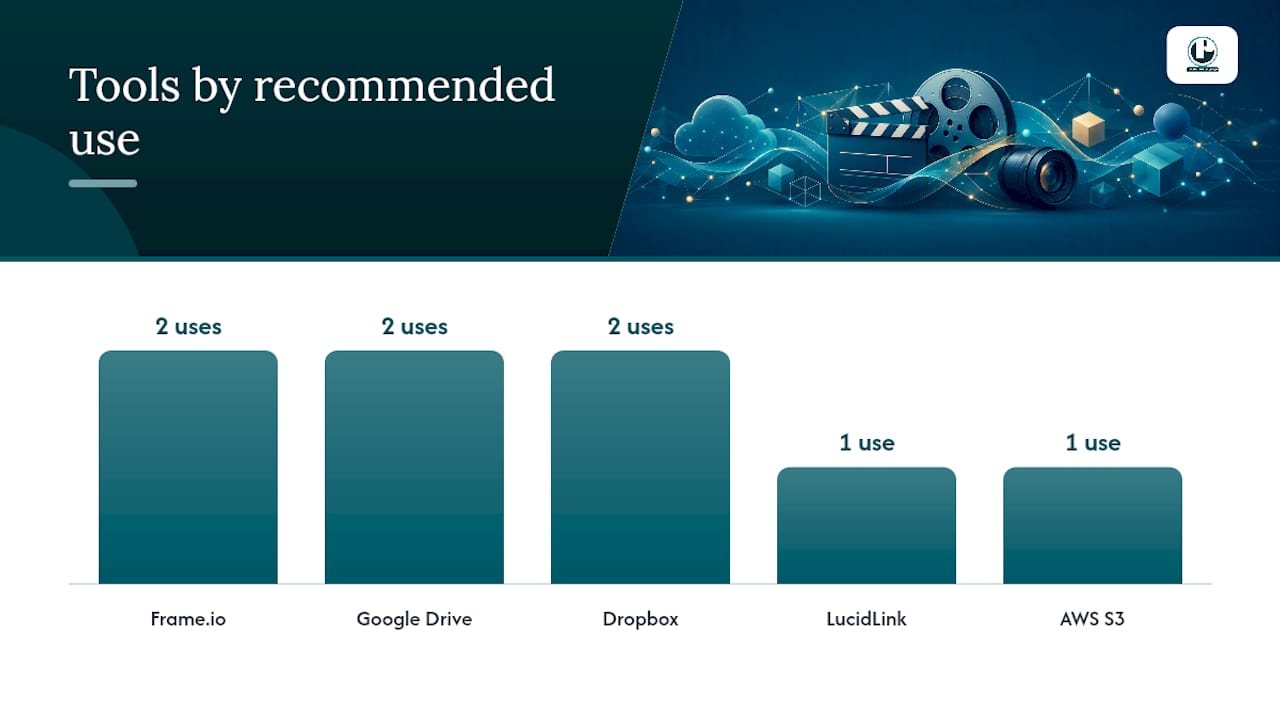
Adobe’s export and workflow guidance covers standard formats (H.264 masters, ProRes for editing, timecode-accurate EDLs) that most professional providers expect as baseline deliverables.
Naming and versioning rules:
Use a consistent naming convention from day one: [ClientName]_[ProjectName]_[Version]_[Date].[ext] (e.g., Acme_ProductLaunch_v03_20260315.mp4). Never send a file named “final_FINAL_v2_USE THIS ONE.” Require the provider to confirm receipt of all assets before work begins, and get that confirmation in writing.
How Puritano Media Group runs a project end to end
Understanding how a full-service provider actually executes a project helps you set realistic expectations and ask better questions during vetting.
Puritano’s production phases and typical milestones:
Intake and discovery: Client brief review, scope confirmation, and contract signing. Typically 2–5 business days.
Creative concept: Treatment development, mood board, and script draft (for full production). 3–7 business days depending on complexity.
Production planning: Location scouting, crew scheduling, equipment prep, and shot list. 5–10 business days.
Shoot: Single or multi-day production depending on scope.
Edit and post: Assembly cut, client review, revisions, color, audio mix, graphics, and final export. 5–15 business days depending on length and complexity.
Review and approval: Structured feedback rounds with time-coded notes. Typically 1–2 rounds included.
Final delivery: Master file, social cuts, project files, and any licensed assets per the contract.
A representative project structure (corporate video):
A mid-size nonprofit needed a 3-minute organizational overview video for a fundraising campaign. The engagement covered scripting, a single shoot day with a two-person crew, full post-production, and two social cuts. The provider managed the entire pipeline from brief to delivery, with one structured review round. The outcome was a broadcast-ready master and two platform-optimized cuts delivered within the agreed timeline.
Reusable brief template for Puritano-style projects:
Objective: What is the business or campaign goal?
KPIs: Views, completion rate, conversions, or brand lift?
Format specs: Length, aspect ratio, platform(s)
Deliverables: Master, social cuts, SRT, project file, raw footage
Brand assets: Logo, color palette, approved fonts, music guidelines
Legal and usage rights: Platforms, territories, duration of use
Schedule: Brief date, shoot date, rough cut due, final delivery due
Pro Tip: Send your provider a “brand bible” or a one-page brand reference sheet before the creative concept phase. Providers who receive clear brand guardrails at the start produce first drafts that require far fewer revisions.
What most clients get wrong about outsourcing video
Here is what we see repeatedly, and what we recommend instead.
The most common mistake is not having a single decision-maker on the client side. When three people send conflicting feedback on a rough cut, the provider has to choose whose note to follow, and someone is always unhappy with the result. Assign one person to consolidate all internal feedback before it goes to the provider. One voice, one round, one clear direction.
The second mistake is treating the brief as optional. A vague brief produces a vague video. The more specific you are about objective, audience, tone, and reference examples, the less you spend on revisions. We have seen projects where a thorough brief cut the revision cycle from three rounds to one.
On governance rhythms: weekly check-ins during active production keep small misalignments from becoming expensive reshoots. A shared asset library (Google Drive or Frame.io) where both teams deposit approved files prevents the “I can’t find the logo” delay that shows up in nearly every first engagement. For managing the ongoing relationship, Puritano’s guide to managing client video projects covers the operational side in practical detail.
Treat your external production partner as an extension of your team, not a vendor you hand a ticket to. The providers who consistently deliver great work are the ones whose clients brief them well, give clear feedback, and pay on time.
Puritano Media Group: full-service production for businesses and creators
If you have read this far, you know what good outsourcing looks like. Puritano Media Group delivers exactly that: a full-service production partner with over two decades of experience serving corporate clients, nonprofits, government agencies, and marketing teams nationally and across the DMV.
Three reasons clients come to Puritano for their first outsourced project:
Full-service scope. From scripting and crew to color and final delivery, Puritano handles the entire pipeline, so your team stays focused on strategy, not logistics.
Proven creative range. The music video portfolio demonstrates the creative quality Puritano brings to every format, from social content to broadcast commercials.
Event and virtual production. For organizations running live or hybrid events, the virtual events case study shows how Puritano manages multi-camera capture, live switching, and post-production in a single engagement.
Request a pilot quote or a discovery call to scope your first project. Bring your one-page brief and a reference video, and Puritano will return a clear proposal with deliverables, timeline, and pricing.
Sources
Recommended


Comments